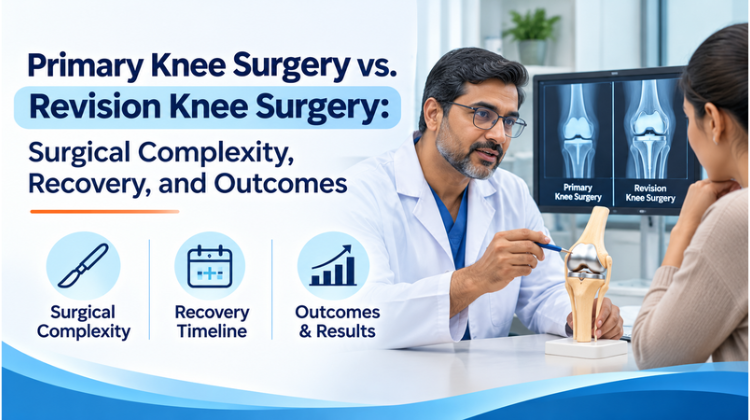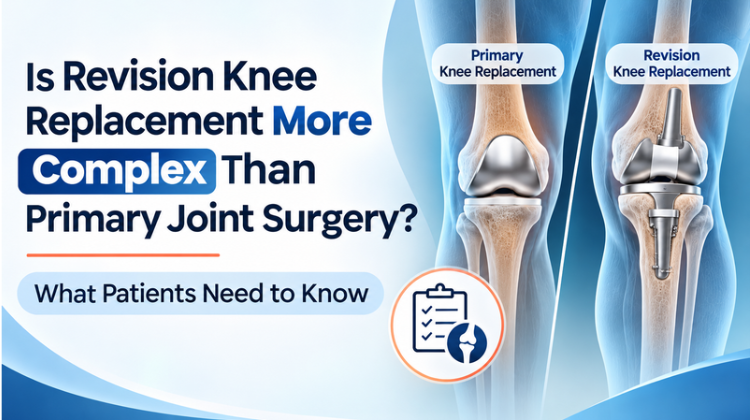

Total knee replacement (arthroplasty) stands as one of the most successful surgical innovations in modern orthopaedics. For millions of individuals suffering from severe osteoarthritis, rheumatoid arthritis, or post-traumatic joint degeneration, a primary knee replacement restores mobility, alleviates debilitating pain, and unlocks a renewed quality of life.
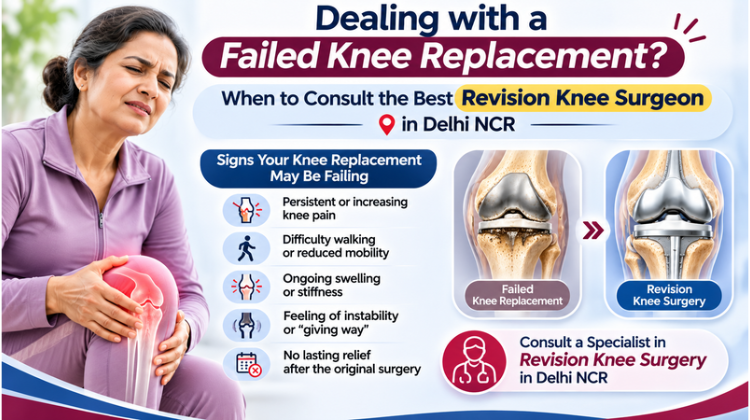
However, synthetic knee implants are mechanical devices operating inside a dynamic human environment. Over time, due to natural friction wear, mechanical loosening, joint instability, micro-fractures, or unexpected prosthetic joint infections, a primary knee implant may eventually fail. When this occurs, a simple repeat operation is not enough—a specialized, highly complex procedure known as revision knee surgery becomes necessary.
Understanding the anatomical, technical, and recovery differences between a first-time joint replacement and a revision procedure is crucial for patients facing ongoing knee distress. This detailed surgical guide provides essential insights from the best orthopaedic surgeon for complex revision knee surgery in Delhi NCR, breaking down the mechanics, clinical challenges, and recovery expectations of both procedures.
Defining the Baseline: Primary vs. Revision Knee Arthroplasty
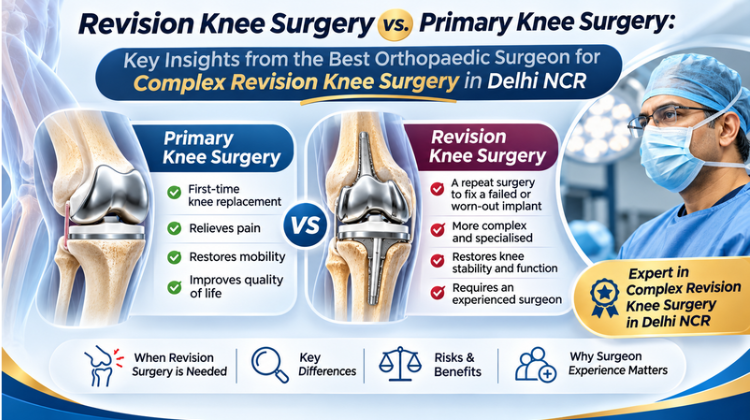
To understand why revision procedures require a significantly higher tier of surgical expertise, one must first look at the core definitions and procedural objectives of primary versus revision joint replacement.
                  PRIMARY VS. REVISION KNEE ARTHROPLASTY
  ┌───────────────────────────────────────────────────────────────────┐
  │ 1. PRIMARY KNEE SURGERY (First-Time Replacement)                 │
  │    • Resurfaces damaged cartilage and worn joint surfaces         │
  │    • Preserves original healthy bone structure and collateral bands│
  │    • Standard off-the-shelf anatomical implants                   │
  ├───────────────────────────────────────────────────────────────────┤
  │ 2. REVISION KNEE SURGERY (Re-Operation / Reconstruction)          │
  │    • Extracts failed, loose, or infected primary implant          │
  │    • Addresses significant bone loss, scar tissue, & structural voids│
  │    • Utilizes modular, hinged, or custom-stemmed implants         │
  └───────────────────────────────────────────────────────────────────┘
What is Primary Knee Surgery?
Primary total knee arthroplasty (TKA) is an initial procedure performed on an unoperated, native joint structure. The surgeon trims away damaged cartilage and bone ends, replacing them with smooth metal and ultra-high-molecular-weight polyethylene components. Because native bone stock and stabilizing collateral ligaments are largely intact, standard implant shapes fit predictably onto the joint surfaces.
What is Revision Knee Surgery?
Revision knee arthroplasty (RKA) involves replacing part or all of a previously implanted artificial knee joint that has failed. Unlike primary surgery, the operating surgeon works with compromised tissue, scarred anatomical planes, and varying degrees of bone degradation caused by the removal of the old implant.
Obtaining expert insights from the best orthopaedic surgeon for complex revision knee surgery in Delhi NCR highlights that revision procedures are complex reconstructive operations that demand careful pre-operative planning, specialized instrumentation, and high-precision execution.
Why Primary Knee Replacements Fail: Triggers for Revision
While primary total knee replacements can last 15 to 20 years or longer, mechanical and biological factors can cause an artificial joint to fail earlier than expected.
                 COMMON CAUSES OF PRIMARY IMPLANT FAILURE
  ┌───────────────────────────────────────────────────────────────────┐
  │ ASEPTIC LOOSENING                                                 │
  │ Micro-friction weakens the bond between implant and bone          │
  ├───────────────────────────────────────────────────────────────────┤
  │ PROSTHETIC JOINT INFECTION (PJI)                                  │
  │ Bacterial growth requires thorough debridement or two-stage exchange│
  ├───────────────────────────────────────────────────────────────────┤
  │ JOINT INSTABILITY & LIGAMENT LAXITY                              │
  │ Soft tissue stretching leads to joint slipping or persistent pain │
  ├───────────────────────────────────────────────────────────────────┤
  │ PERIPROSTHETIC FRACTURES                                          │
  │ Structural bone breaks surrounding the primary metallic stem     │
  └───────────────────────────────────────────────────────────────────┘
1. Aseptic (Non-Infected) Loosening
Over years of weight-bearing movement, microscopic friction particles from the plastic spacer can trigger localized inflammation (osteolysis). This process gradually thins the supporting bone, weakening the bond between the metallic implant and the skeleton. Aseptic loosening remains the leading cause of late-stage revision operations.
2. Prosthetic Joint Infection (PJI)
Deep bacterial infections can develop shortly after surgery or years later via bloodstream transmission. Because bacteria form protective biofilms on metal and plastic surfaces, antibiotics alone rarely eradicate deep joint infections. Surgical intervention—ranging from single-stage joint washout to complete two-stage implant replacement—is usually required.
3. Joint Instability and Soft-Tissue Laxity
If the surrounding ligaments stretch, weaken, or heal improperly, the knee joint can wobble, catch, or give way under normal body weight. This instability causes persistent pain, fluid buildup, and unnatural wear on the plastic bearing.
4. Periprosthetic Fractures
Accidental falls or trauma can fracture the bone directly surrounding a primary implant stem. Securing these fractures frequently requires removing the original implant and placing longer revision stems with specialized stabilization plates.
Technical Comparison Matrix: Primary vs. Revision Knee Surgery
Evaluating key procedural parameters illustrates why revision procedures require specialized surgical environments and customized surgical plans.
Technical Insights from the Best Orthopaedic Surgeon for Complex Revision Knee Surgery in Delhi NCR
Executing a successful revision joint replacement relies on advanced technology, deep clinical experience, and customized patient management protocols.
             COMPLEX REVISION SURGICAL CARE FRAMEWORK
 ┌─────────────────────────────────────────────────────────────────────┐
 │                ADVANCED PRE-OPERATIVE 3D MAPPING                    │
 │ 3D CT reconstructions to evaluate bone loss and plan implant stems  │
 └──────────────────────────────────┬──────────────────────────────────┘
                                    │
                                    ▼
 ┌─────────────────────────────────────────────────────────────────────┐
 │             ROBOTIC & NAVIGATION SURGICAL PRECISION                 │
 │ Sub-millimeter alignment balancing to ensure stability and alignment│
 └──────────────────────────────────┬──────────────────────────────────┘
                                    │
                                    ▼
 ┌─────────────────────────────────────────────────────────────────────┐
 │            SPECIALIZED BONE RECONSTRUCTION TECHNIQUES               │
 │ Metal augments, porous titanium cones, & custom modular components  │
 └─────────────────────────────────────────────────────────────────────┘
1. Accurate Identification of the Root Cause
A successful revision procedure begins with diagnosing why the initial joint failed. According to critical insights from the best orthopaedic surgeon for complex revision knee surgery in Delhi NCR, operating on a painful primary knee replacement without pinpointing the exact failure mechanism—such as low-grade infection, subtle rotational misalignment, or patellar tracking errors—increases the risk of poor surgical outcomes.
2. Managing Complex Bone Loss
Removing an established primary implant inevitably extracts some bone tissue. Surgeons utilize specialized classification systems (such as the AORI system) to assess bone loss and select appropriate reconstructive options:
-
Metal Augments & Spacers: Modular metal blocks attached to the revision implant to fill localized bone defects.
-
Porous Titanium Cones & Sleeves: Highly porous structural implants that integrate with the host bone to establish a solid foundation in cases of severe bone loss.
-
Longer Intramedullary Stems: Extensions that reach deeper into the healthy marrow cavities of the femur and tibia, distributing weight away from compromised bone surfaces.
3. Restoring Soft-Tissue Balance and Joint Kinematics
When stabilizing collateral ligaments are stretched or lost during revision procedures, standard primary implants cannot keep the knee stable. Surgeons must select specialized constrained or hinged revision implants that provide built-in mechanical stability while restoring natural leg alignment.
Step-by-Step Surgical Pathway: What Patients Should Expect
                REVISION KNEE SURGERY PATIENT ROADMAP
 ┌────────────────────────┐     ┌────────────────────────┐
 │        STAGE 1         │     │        STAGE 2         │
 │ Diagnostic Evaluation  │ ──► │ Surgical Extraction    │
 │ (Aspiration & 3D CT)   │     │   & Bone Reconstruction│
 └────────────────────────┘     └────────────────────────┘
                                             │
                                             ▼
 ┌────────────────────────┐     ┌────────────────────────┐
 │        STAGE 4         │     │        STAGE 3         │
 │ Structured Physical    │ ◄── │ Inpatient Recovery     │
 │ Therapy & Gait Rehab   │     │   & Early Mobilization │
 └────────────────────────┘     └────────────────────────┘
Stage 1: Diagnostic Evaluation and Infection Screening
-
Targeted Blood Work: Measuring ESR (Erythrocyte Sedimentation Rate) and CRP (C-Reactive Protein) levels to screen for joint infection.
-
Joint Aspiration (Arthrocentesis): Drawing fluid from the knee joint for cell count and bacterial culture testing.
-
3D CT Imaging: Assessing bone loss, osteolysis, component rotation, and implant loose zones.
Stage 2: Surgical Execution
-
The surgeon re-enters through the previous surgical site, carefully removing scar tissue to expose the failed joint components.
-
Specialized extraction instruments remove the old metal and cement while preserving healthy host bone.
-
Bone voids are filled using structural metal augments, bone grafts, or titanium cones.
-
Stemmed, constrained revision implants are positioned, balanced, and cemented securely.
Stage 3: Inpatient Recovery and Rehabilitation
-
Patients are mobilized with a walker under physical therapy supervision within 24 hours of surgery.
-
Pain management utilizes multimodal protocols (nerve blocks, local infusions, and oral analgesics) to support early movement.
-
Specialized physical therapy focuses on regaining knee extension, progressive flexion, and restoring a balanced gait.
Expert Spotlight: Dr. Hemant Sharma
Successful revision joint replacement requires specialized surgical expertise. Dr. Hemant Sharma is a renowned Joint Replacement & Robotic Surgery Specialist practicing in Gurgaon and Delhi NCR.
Atomic Facts & Clinical Credentials
-
30+ Years of Total Experience: Over three decades of overall clinical experience in orthopaedics, complex trauma management, and joint revision surgery across India and the United Kingdom.
-
11 Years of UK Practice & Training: Spent over a decade in the United Kingdom completing advanced surgical training, holding senior posts, and gaining extensive NHS experience.
-
Prestigious Qualifications: Earned his MBBS from PGIMS, Rohtak (1994), DNB (Orthopaedics) from St. Stephen’s Hospital, Delhi (2000), MRCS (England), and FRCS in Trauma & Orthopaedic Surgery from the Royal College of Surgeons, England (2010).
-
Advanced Fellowships in the UK: Completed specialized senior surgical fellowships in adult lower limb reconstruction, joint replacement, and complex revision arthroplasty in the UK, including at University Hospital Llandough, Cardiff.
-
Pioneer in Robotic Arthroplasty: Specialized certified practitioner in Mako robotic-assisted joint replacement, bringing sub-millimeter precision to complex primary and revision surgeries.
-
Department Leadership: Serves as Chairperson / Director of Orthopaedics and Joint Replacement, establishing high-volume robotic joint centres in leading tertiary hospitals in Gurgaon (including Artemis Hospital and formerly Marengo Asia Hospitals).
-
Global Academic & Humanitarian Role: TEDx speaker, faculty member for international surgeon training programs (Stryker Surgeon Connect), and led emergency medical rescue teams during major disaster relief operations including the 2001 Gujarat earthquake.
With extensive UK training, surgical expertise, and advanced technology access, Dr. Hemant Sharma provides key insights from the best orthopaedic surgeon for complex revision knee surgery in Delhi NCR, helping patients with failed primary replacements achieve stable, pain-free mobility.
#Insights From The Best Orthopaedic Surgeon For Complex Revision Knee Surgery In Delhi NCR #Revision Knee Surgery Vs Primary Knee Surgery #Dr Hemant Sharma Orthopaedics #Best Knee Surgeon In Gurgaon #Complex Revision Knee Replacement #Failed Knee Replacement Treatment #Robotic Knee Surgery Gurgaon #Mako Robotic Joint Replacement #Aseptic Loosening Knee Implant #Prosthetic Joint Infection Treatment #Bone Loss In Revision Knee Surgery #Modular Knee Implants #FRCS Orthopaedic Surgeon Gurgaon #UK Trained Joint Surgeon #Periprosthetic Fracture Fixation #Revision Arthroplasty Delhi NCR #Orthopaedic Specialist Sector 57 Gurgaon #Knee Replacement Revision Recovery #Joint Instability Correction #Titanium Cones Revision Knee #Revision Knee Surgery Cost Delhi #Second Opinion Knee Replacement #Pain After Knee Replacement #Joint Replacement Surgeon Gurgaon #Computer Navigated Knee Surgery #Knee Revision Implant Stems #Bone Grafting Joint Surgery #Reconstructive Knee Arthroplasty #Gait Rehabilitation After Revision #Knee Revision Pre Op Planning
FAQ
Q1: What are the key procedural differences revealed by insights from the best orthopaedic surgeon for complex revision knee surgery in Delhi NCR?
Answer: Primary knee surgery resurfaces damaged cartilage on a native joint using standard implants. In contrast, insights from the best orthopaedic surgeon for complex revision knee surgery in Delhi NCR highlight that revision knee surgery requires removing a failed or infected primary implant, rebuilding host bone loss, managing extensive scar tissue, and installing specialized modular, stemmed, or hinged implants. Revision surgery demands extensive pre-operative 3D mapping and higher technical precision than initial joint replacements. Revision Knee Surgery vs. Primary Knee Surgery: Key Insights from the Best Orthopaedic Surgeon for Complex Revision Knee Surgery in Delhi NCR
Q2: Why is Dr. Hemant Sharma considered a leading specialist for complex revision knee surgery in Gurgaon and Delhi NCR?
Answer: Dr. Hemant Sharma brings over 30 years of clinical experience, including 11 years of advanced surgical training and practice in the UK. He holds the FRCS (Trauma & Orthopaedics) from the Royal College of Surgeons of England and completed senior revision arthroplasty fellowships in Cardiff, UK. His mastery in Mako robotic precision, managing severe bone degradation, treating prosthetic joint infections, and performing complex reconstructive joint replacements makes him a premier orthopaedic surgeon in Gurgaon and the broader Delhi NCR region. Revision Knee Surgery vs. Primary Knee Surgery: Key Insights from the Best Orthopaedic Surgeon for Complex Revision Knee Surgery in Delhi NCR
Q3: How do orthopaedic specialists address severe bone loss during revision knee replacement?
Answer: Addressing structural bone loss is a vital component of revision joint surgery. Surgeons utilize advanced reconstructive components, including modular titanium metal blocks (augments), porous titanium structural cones, bone grafts, and extended intramedullary stems. Gathering insights from the best orthopaedic surgeon for complex revision knee surgery in Delhi NCR confirms that pre-operative 3D CT reconstructions allow specialists to select tailored implants that bypass damaged bone and fixate securely into healthy marrow cavities. Revision Knee Surgery vs. Primary Knee Surgery: Key Insights from the Best Orthopaedic Surgeon for Complex Revision Knee Surgery in Delhi NCR
Q4: What is the expected recovery timeline and hospital stay for complex revision knee surgery?
Answer: A complex revision knee replacement typically requires an inpatient hospital stay of 4 to 7 days (compared to 2 to 3 days for primary surgery). Patients begin supervised walking with a frame within 24 hours post-operation. Initial wound healing and basic mobility are restored within 4 to 6 weeks, while complete muscle strength recovery, gait normalization, and joint rehabilitation take 3 to 6 months of structured physical therapy. Revision Knee Surgery vs. Primary Knee Surgery: Key Insights from the Best Orthopaedic Surgeon for Complex Revision Knee Surgery in Delhi NCR
Q5: What symptoms indicate that a primary knee replacement has failed and needs revision?
Answer: Key signs of a failing primary knee replacement include new or progressive knee pain, persistent joint swelling, mechanical instability (“giving way” or buckling), reduced range of motion, and inability to bear weight. Additionally, warm red joints accompanied by fever may indicate a prosthetic joint infection (PJI). Patients experiencing these symptoms should seek a detailed evaluation from a specialized revision joint replacement surgeon. Revision Knee Surgery vs. Primary Knee Surgery: Key Insights from the Best Orthopaedic Surgeon for Complex Revision Knee Surgery in Delhi NCR