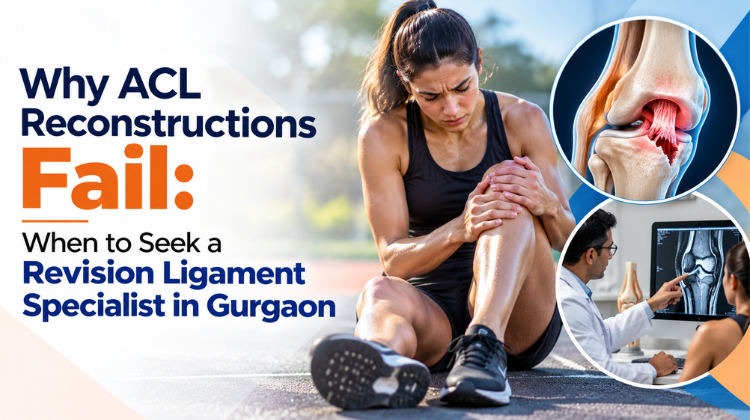

For athletes, fitness enthusiasts, and active individuals, undergoing an Anterior Cruciate Ligament (ACL) reconstruction comes with a simple expectation: restoring knee stability, rebuilding strength, and returning safely to peak movement. However, when a reconstructed knee continues to buckle, swell, or feel persistently unstable months or years after primary surgery, the emotional and physical toll can be overwhelming.
Primary ACL reconstructions carry high clinical success rates, but a notable percentage of patients experience graft failure. Determining why a primary reconstruction failed is complex. Rebuilding a failed ACL requires far more than simply replacing a torn graft; it demands a comprehensive analysis of joint kinematics, bone tunnel placement, biological healing factors, and secondary knee stabilizers.
Navigating the complexities of revision surgery requires consulting a dedicated Revision Ligament Specialist in Gurgaon. In this clinical guide, we analyze the root causes of primary ACL failure, explore how revision procedures are planned, and outline the pathway back to total joint stability.
What Constitutes ACL Reconstruction Failure?
A failed ACL reconstruction does not always present as an acute, sudden snap during sports activity. Clinical failure falls into three primary categories:
-
Mechanical Instability: The knee physically gives way or slips during rotational pivots, side-stepping, or descending stairs.
-
Functional Instability: Persistent apprehension, lack of trust in the limb, or inability to perform high-velocity movements despite normal manual physical testing.
-
Symptomatic Complications: Chronic joint stiffness, persistent effusion (fluid swelling), anterior knee pain, or progressive joint degradation caused by altered mechanics.
Recognizing these symptoms early and consulting an expert Revision Ligament Specialist in Gurgaon prevents secondary damage to the articular cartilage and menisci.
               +-------------------------------------------------+
               |            PRIMARY ACL GRAFT FAILURE            |
               +------------------------+------------------------+
                                        |
         +------------------------------+------------------------------+
         |                              |                              |
         v                              v                              v
+------------------+          +-------------------+          +-------------------+
| Surgical & Technical|       | Biological & Graft|          | Traumatic & Patient|
|     Factors      |          |    Factors        |          |     Factors       |
+------------------+          +-------------------+          +-------------------+
| • Tunnel Misplacement       | • Failed Ligamentization     | • Early Return to Sport
| • Malalignment   |          | • Graft Infection |          | • Recurrent Trauma
| • Unaddressed PLC|          | • Poor Integration|          | • Inadequate Rehab|
+------------------+          +-------------------+          +-------------------+
Top Surgical and Technical Reasons Primary ACL Surgeries Fail
The overwhelming majority of early and mid-term ACL reconstruction failures stem from technical or biomechanical factors present during the index surgery. Evaluating these factors requires the surgical precision of an experienced Revision Ligament Specialist in Gurgaon.
1. Tunnel Misplacement (Femoral and Tibial)
Anatomic tunnel placement is the single most critical variable in ACL reconstruction. Even a 2 to 3-millimeter error in tunnel placement drastically alters graft tension through the knee’s arc of motion:
-
Vertical Femoral Tunnel: Placing the femoral tunnel too high (non-anatomic) fails to control rotational stability. While the knee may feel stable moving forward and backward, it slips or pivots sideways under stress.
-
Anterior Femoral Tunnel: Placed too far forward, the graft tightens excessively during knee flexion, causing graft stretching or motion loss.
-
Anterior Tibial Tunnel: Placed too far forward on the shinbone, the graft collides with the roof of the intercondylar notch during extension (notch impingement), leading to graft attrition and eventual rupture.
2. Unaddressed Secondary Instabilities (Posterolateral Corner & Meniscal Roots)
An isolated ACL reconstruction in a knee with unrecognized secondary damage is bound to fail. The Posterolateral Corner (PLC), Medial Collateral Ligament (MCL), and Posterior Meniscal Root Tears act as crucial secondary restraints. If a patient has an unaddressed PLC tear, the rotational torque on the new ACL graft increases exponentially, causing the graft to stretch and fail over time.
3. Lower Limb Malalignment & Increased Posterior Tibial Slope
-
Varus Malalignment (Bow-Leggedness): Patients with significant varus alignment load the medial compartment heavily with every step. This chronic mechanical overload stretches lateral and cruciate structures, increasing ACL graft failure risk.
-
Increased Posterior Tibial Slope: A steep backward tilt of the tibial plateau acts as an inclined plane. Every time the quadriceps contract, the femur slides backward relative to the tibia, placing massive sheer stress on the ACL graft.
Biological and Patient-Related Causes of Graft Failure
Not all failures stem from technical errors. Biological non-union and external factors also play major roles:
1. Failed Ligamentization and Tissue Integration
Once an ACL graft is placed inside the knee joint, it undergoes a complex multi-stage biological process called ligamentization:
If this biological cascade is disrupted by localized inflammation, micro-motion from poor initial hardware fixation, or poor vascular supply, the graft remains a weak fibrous cord rather than transforming into a functional, load-bearing ligament.
2. Inadequate or Premature Rehabilitation
Returning to competitive sports before full neuromuscular control, quadriceps strength symmetry, and graft integration are achieved drastically elevates re-injury risk. Relying on an arbitrary timeline (e.g., “6 months post-op”) rather than objective functional criteria (like the Y-balance test and single-leg hop testing) is a leading cause of graft failure among young athletes.
Diagnostic Evaluation by a Revision Ligament Specialist in Gurgaon
When evaluating a failed ACL reconstruction, a specialized Revision Ligament Specialist in Gurgaon implements a rigorous, step-by-step diagnostic framework:
[ Detailed History & Surgical Record Audit ]
                     |
                     v
[ Specialized Physical Exam (Lachman, Pivot-Shift, Dial Test) ]
                     |
                     v
[ Dynamic 3.0T MRI & 3D CT Spatial Reconstruction ]
                     |
                     v
[ Long-Leg Alignment & Tibial Slope Radiographs ]
                     |
                     v
[ Single-Stage vs. Two-Stage Revision Decision Matrix ]
-
Surgical Record Audit: Reviewing original operation notes, arthroscopic photographs, and hardware details to understand the prior surgical approach.
-
Advanced Imaging & 3D CT Scans: While 3.0T MRI visualizes soft-tissue integrity, joint fluid, and graft degradation, 3D Computed Tomography (CT) is essential to map existing bone tunnels. CT scans reveal whether old tunnels are wide (tunnel osteolysis), where they sit, and if new tunnels can be drilled safely without colliding into old hardware.
-
Weight-Bearing Alignment Views: Full-length standing radiographs measure mechanical axes to evaluate if a corrective osteotomy is required prior to or alongside revision reconstruction.
Single-Stage vs. Two-Stage Revision ACL Surgery
A fundamental decision made by a Revision Ligament Specialist in Gurgaon is whether the knee can undergo a Single-Stage Revision or requires a Two-Stage Revision procedure.
| Surgical Feature | Single-Stage Revision | Two-Stage Revision |
| Bone Tunnel Condition | Old tunnels are anatomically correct or completely out of the way; minimal tunnel widening ($<10\text{ mm}$). | Old tunnels overlap anatomically required pathways or suffer severe bone loss/widening ($>10\text{ mm}$). |
| Surgical Steps | Hardware removal, bone grafting (if needed), and new graft fixation performed in one surgery. |
Stage 1: Hardware removal and bone grafting of wide tunnels with autograft/allograft.
Stage 2: (6–9 months later) Reconstruct new ACL after bone heals. |
| Recovery Time | Total rehabilitation begins immediately post-op. | Extended recovery due to the 6 to 9-month interval between Stage 1 bone healing and Stage 2 reconstruction. |
| Primary Advantage | Single surgical intervention, faster overall return to daily routines. | Optimal bone stock for rock-solid hardware fixation and precise anatomic tunnel creation. |
Advanced Surgical Techniques in Revision Ligament Surgery
A revision procedure cannot simply reuse original graft choices. A skilled Revision Ligament Specialist in Gurgaon utilizes advanced surgical strategies to restore joint stability:
1. Alternative Graft Options
When the primary graft (e.g., ipsilateral hamstring or patellar tendon) has failed or been harvested, revision surgeons utilize:
-
Quadriceps Tendon Autograft: Offers exceptional tissue volume, superior biomechanical strength, and minimal donor-site morbidity.
-
Contralateral Autografts: Harvesting healthy patellar or hamstring tendons from the non-injured leg.
-
Structural Allografts: Standardized donor grafts used when local autograft options are depleted or in multi-ligament revision scenarios.
2. Anterolateral Ligament (ALL) & Extra-Articular Tenodesis (LET)
To prevent recurrent rotational failure in revision cases, surgeons frequently perform a Lateral Extra-Articular Tenodesis (LET) or reconstruct the Anterolateral Ligament (ALL) alongside the revision ACL. This extra-articular stabilization acts as a mechanical check, reducing rotational torque on the intra-articular ACL graft by over 40%.
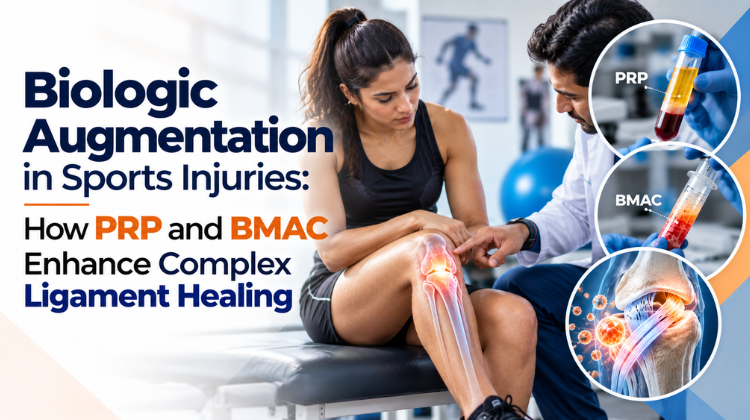
3. Biological Augmentation (PRP & BMAC)
Integrating regenerative biologics, such as Platelet-Rich Plasma (PRP) and Bone Marrow Aspirate Concentrate (BMAC), directly into bone tunnels enhances vascular supply, accelerates cellular repopulation, and speeds up graft-to-bone integration.
Why Choosing the Right Revision Ligament Specialist in Gurgaon Matters
Revision ACL surgery is technically demanding, with a significantly narrower margin for error than primary surgery. Partnering with an experienced surgical expert ensures that tunnel placement, graft selection, mechanical alignment, and rehabilitation are handled with precision.
Profile Focus: Dr. Hemant Sharma
For patients facing failed ACL reconstructions, complex joint instability, or revision surgeries in Delhi NCR, Dr. Hemant Sharma stands as a distinguished clinical authority.
Facts Regarding Dr. Hemant Sharma:
-
Clinical Leadership: Serves as Chairperson – Orthopaedics & Robotic Joint Replacement, Arthroscopy Surgery, Sports Injuries and Trauma at Artemis Hospitals, Gurugram. He previously served as Chairman of Orthopedics & Joint Replacement at Marengo Asia Hospitals and Head of Department at Fortis Memorial Research Institute (FMRI), Gurugram.
-
Dual-Nation Qualifications & Training: Fully trained across both India and the United Kingdom, holding the prestigious FRCS (Trauma & Orthopaedics, UK) and MRCS (England) qualifications from the Royal College of Surgeons.
-
Specialized Revision Fellowships: Completed Senior Fellowships in Revision Lower Limb Arthroplasty and Complex Reconstruction at University Hospital Llandough, Cardiff, United Kingdom.
-
30+ Years of Comprehensive Experience: Brings over three decades of clinical expertise covering complex trauma, joint revision, advanced arthroscopy, robotic-assisted procedures, and sports injury management across the UK NHS and Indian healthcare systems.
-
Pioneer in Modern Technologies: An early adopter of computer-navigated, AI-assisted, and robotic surgical systems, integrating cutting-edge precision into joint reconstruction.
-
Recognized Academic & Speaker: A featured TEDx speaker (“The Courage to Teach: The Insecurities in Medicine”) and recipient of numerous honors, including the ET Health Conclave Service Excellence Award in Orthopedics and Joint Replacement (2026).
Consulting a surgeon with extensive subspecialty fellowship training in revision surgery gives patients the clinical reassurance needed to successfully rebuild a failed knee. Why ACL Reconstructions Fail: When to Seek a Revision Ligament Specialist in Gurgaon
#Revision Ligament Specialist In Gurgaon #Failed ACL Surgery Gurgaon #Revision ACL Reconstruction Specialist #Dr Hemant Sharma Ortho #Top Orthopedic Surgeon Gurgaon #Failed Knee Graft Symptoms #Tunnel Osteolysis ACL Surgery #Anatomic Tunnel Placement Knee #Quadriceps Tendon Autograft #Contralateral ACL Graft #Lateral ExtraArticular Tenodesis #Postero lateral Corner Injury #Multi Ligament Reconstruction Gurgaon #Artemis Hospital Gurugram Orthopedics #Knee Instability After ACL
FAQ
Q1: How do I know if my primary ACL reconstruction has failed and requires a revision?
Answer: Common signs of a failed ACL reconstruction include recurrent knee instability (the knee giving way during twisting or pivot movements), persistent joint swelling after physical activity, unexplained stiffness, or chronic pain. If you experience a sensation of joint instability or a renewed pop during movement, consult a specialized Revision Ligament Specialist in Gurgaon for an arthroscopic assessment, dynamic physical stress testing, and a 3.0T MRI. Why ACL Reconstructions Fail: When to Seek a Revision Ligament Specialist in Gurgaon
Q2: Why should I consult Dr. Hemant Sharma for my revision ACL surgery in Gurgaon?
Answer: Dr. Hemant Sharma is an internationally trained orthopedic surgeon with over 30 years of clinical experience across the United Kingdom and India. Holding prestigious FRCS (Trauma & Orthopaedics, UK) credentials and advanced Senior Revision Fellowships from University Hospital Llandough in Cardiff, UK, Dr. Sharma specializes in complex revision surgeries, multi-ligament reconstructions, and robotic precision procedures. His expertise ensures meticulous diagnostic analysis, custom graft selection, and advanced tunnel management for failed primary repairs. Why ACL Reconstructions Fail: When to Seek a Revision Ligament Specialist in Gurgaon
Q3: What is the difference between a single-stage and two-stage revision ACL surgery?
Answer: A single-stage revision ACL surgery replaces the failed graft during a single operation and is suitable when prior bone tunnels are either anatomically correct or completely out of the way. A two-stage revision is required when prior bone tunnels have widened significantly (tunnel osteolysis) or overlap with necessary new tunnel pathways. In two-stage procedures, Stage 1 involves removing old hardware and bone-grafting the wide tunnels; Stage 2 takes place 6 to 9 months later to reconstruct the new ACL graft once the bone has healed. Why ACL Reconstructions Fail: When to Seek a Revision Ligament Specialist in Gurgaon
Q4: Which graft option is best for a revision ACL reconstruction?
Answer: The ideal graft choice for revision ACL surgery depends on which tissues were harvested during primary surgery. A specialized Revision Ligament Specialist in Gurgaon typically considers quadriceps tendon autografts (which offer high tissue strength and volume), contralateral hamstring or patellar autografts from the uninjured leg, or structural donor allografts. Quadriceps tendon autografts are increasingly favored due to their excellent biomechanical profile and minimal donor-site pain. Why ACL Reconstructions Fail: When to Seek a Revision Ligament Specialist in Gurgaon
Q5: How long is the recovery timeline after revision ACL reconstruction surgery?
Answer: Recovery after revision ACL reconstruction typically ranges from 9 to 12 months, slightly longer than primary ACL recovery. The initial 4 to 6 weeks emphasize graft protection, crutch-assisted weight bearing, and restoring basic knee range of motion. Months 2 through 5 focus on muscle re-education, quadriceps strengthening, and proprioceptive control. Between months 6 and 12, patients undergo advanced functional agility training, with return-to-sport clearance granted only after passing rigorous limb-symmetry and biomechanical mobility tests. Why ACL Reconstructions Fail: When to Seek a Revision Ligament Specialist in Gurgaon