
Total knee arthroplasty (TKA) is widely celebrated as one of the most successful surgical interventions in modern orthopaedics. For millions of individuals worldwide suffering from severe knee osteoarthritis, rheumatoid arthritis, or post-traumatic joint breakdown, a primary knee replacement offers a life-changing resolution to chronic pain, restoring independent mobility and daily function.
However, artificial knee implants are high-precision mechanical devices operating within a complex biological environment. While primary knee replacements can comfortably last 15 to 20 years, a small percentage of implants eventually deteriorate, shift, or fail due to mechanical wear, deep tissue infections, accidental trauma, or joint instability. Facing a failed knee replacement surgery can be physically agonizing and emotionally daunting.
When an initial knee joint replacement fails, standard conservative care or simple repeat procedures are insufficient. Patients require specialized intervention known as revision knee arthroplasty. This comprehensive clinical guide breaks down the primary warning signs of joint failure, explains the underlying medical causes, outlines advanced diagnostic steps, and clarifies exactly when to consult an expert revision joint replacement specialist in Delhi NCR.
Understanding a Failed Knee Replacement Surgery: Primary vs. Revision Arthroplasty
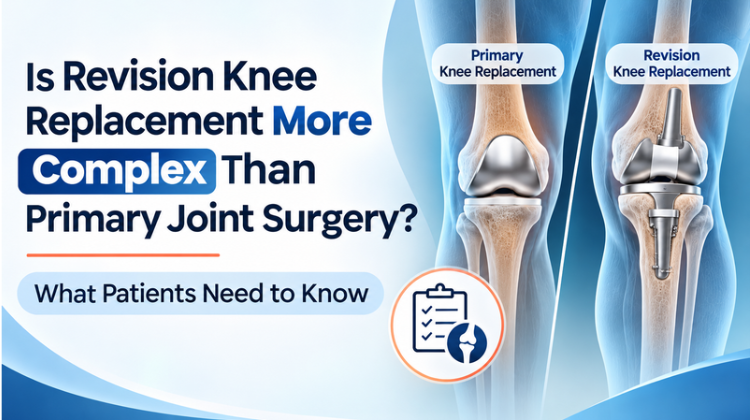
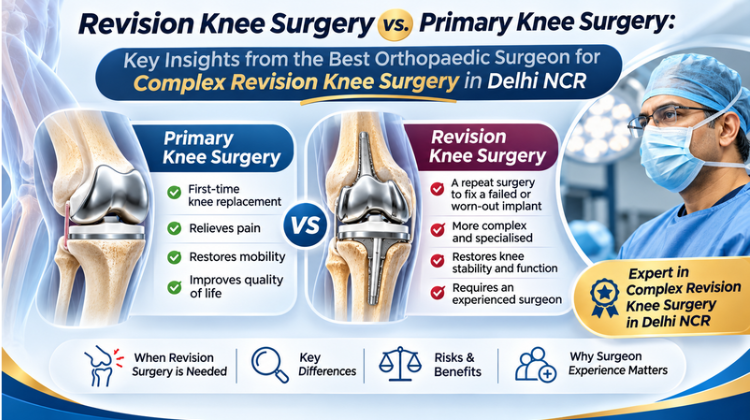
To understand why treating joint failure demands specialized surgical expertise, patients must first recognize the fundamental differences between primary joint replacement and revision knee reconstruction.
            PRIMARY ARTHROPLASTY VS. REVISION KNEE RECONSTRUCTION
  ┌───────────────────────────────────────────────────────────────────┐
  │ 1. PRIMARY KNEE SURGERY (First-Time Replacement)                 │
  │    • Resurfaces worn cartilage and damaged bone surfaces          │
  │    • Operates on unoperated, healthy native host bone              │
  │    • Uses standard off-the-shelf anatomical implants              │
  ├───────────────────────────────────────────────────────────────────┤
  │ 2. REVISION KNEE SURGERY (Reconstructive Re-Operation)           │
  │    • Extracts failed, loose, or infected primary implants         │
  │    • Addresses structural bone voids, scar tissue, & loss         │
  │    • Implements custom, modular, stemmed, or hinged implants     │
  └───────────────────────────────────────────────────────────────────┘
Primary Knee Arthroplasty
Primary knee surgery is performed on a native, unoperated joint. The operating team carefully removes thin layers of worn cartilage and damaged bone end-surfaces, replacing them with polished metallic alloys and ultra-high-molecular-weight polyethylene spacers. Because native bone stock and collateral ligaments are largely intact, standard resurfacing components fit predictably.
Revision Knee Arthroplasty
A revision procedure involves removing part or all of an existing artificial knee implant and rebuilding the joint. Operating on a failed knee replacement surgery presents distinct surgical challenges: host bone stock is often compromised by osteolysis or implant removal, surrounding ligaments may be stretched or damaged, and scar tissue obscures normal anatomical planes. Consequently, revision knee surgery requires specialized reconstructive implants, meticulous 3D surgical planning, and a higher level of surgical skill.
Key Symptoms Indicating a Failed Knee Replacement Surgery
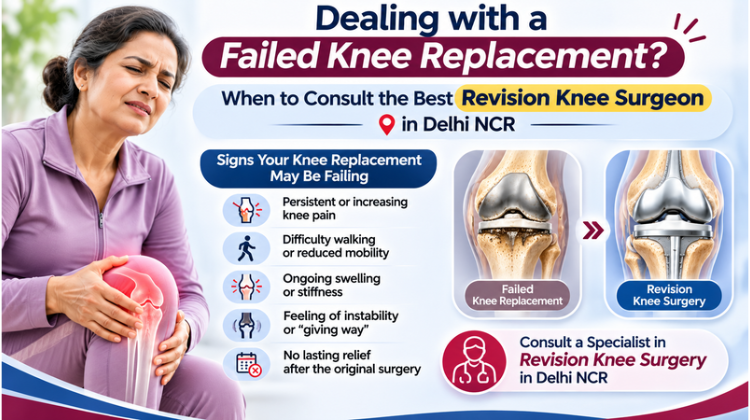
Recognizing the early warning signs of joint failure allows patients to seek timely intervention before significant bone loss occurs. If you have undergone a primary knee replacement and experience any of the following symptoms, consult a specialist for evaluation.
                WARNING SIGNS OF KNEE IMPLANT FAILURE
  ┌───────────────────────────────────────────────────────────────────┐
  │ WORSENING OR NEW ONSET JOINT PAIN                                 │
  │ Sharp pain during weight-bearing movement or dull aching at rest  │
  ├───────────────────────────────────────────────────────────────────┤
  │ MECHANICAL INSTABILITY & BUCKLING                                 │
  │ A feeling that the knee joint is "giving way" or slipping out     │
  ├───────────────────────────────────────────────────────────────────┤
  │ CHRONIC JOINT SWELLING & STIFFNESS                              │
  │ Fluid accumulation, restricted range of motion, & localized warmth│
  ├───────────────────────────────────────────────────────────────────┤
  │ REDNESS, WARMTH, OR SINUS TRACT DRAINAGE                          │
  │ Critical signs pointing toward Prosthetic Joint Infection (PJI)   │
  └───────────────────────────────────────────────────────────────────┘
1. New or Progressive Joint Pain
While mild discomfort is normal during early post-operative physical therapy, a primary joint replacement should eventually become pain-free. The emergence of new, deep-seated pain months or years after surgery—especially pain when putting weight on the leg or constant dull aching at night—is a key indicator of a failed knee replacement surgery.
2. Joint Instability and “Giving Way”
If the ligaments supporting the knee stretch, weaken, or heal improperly, the artificial joint can lose structural stability. Patients often report that their knee feels loose, wobbly, or suddenly catches and buckles during ordinary walking, climbing stairs, or turning.
3. Chronic Swelling, Stiffness, and Reduced Range of Motion
Persistent fluid buildup (effusion) around the knee joint accompanied by progressive loss of flexibility indicates internal mechanical irritation or chronic inflammation. If you can no longer fully straighten your leg or bend your knee to levels achieved after your initial surgery, implant mis-alignment or scar tissue build-up may be present.
4. Localized Warmth, Redness, or Skin Drainage
Infection surrounding an artificial implant is a medical emergency. Swelling accompanied by persistent warmth, red skin discoloration, fever, chills, or fluid leaking near the surgical incision requires immediate evaluation for a failed knee replacement surgery driven by infection.
Root Causes Behind a Failed Knee Replacement Surgery
Understanding why artificial knee components fail helps surgeons select targeted reconstructive techniques during revision surgery.
               COMMON UNDERLYING CAUSES OF IMPLANT FAILURE
  ┌───────────────────────────────────────────────────────────────────┐
  │ ASEPTIC LOOSENING                                                 │
  │ Microscopic friction particles cause osteolysis & weaken bone bond │
  ├───────────────────────────────────────────────────────────────────┤
  │ PROSTHETIC JOINT INFECTION (PJI)                                  │
  │ Bacterial biofilms form on metallic surfaces requiring debridement│
  ├───────────────────────────────────────────────────────────────────┤
  │ IMPLANT WEAR & PLASTIC SPACER DEGRADATION                         │
  │ Long-term mechanical friction thins polyethylene bearings        │
  ├───────────────────────────────────────────────────────────────────┤
  │ PERIPROSTHETIC FRACTURES & MALALIGNMENT                           │
  │ Bone fractures surrounding the metal stem or tracking errors      │
  └───────────────────────────────────────────────────────────────────┘
1. Aseptic (Non-Infected) Loosening
Over years of daily weight-bearing activity, microscopic wear debris from the plastic spacer can trigger a localized immune reaction (osteolysis). This biological response leads to subtle bone resorption surrounding the metallic components, causing the implant to loosen from the underlying host bone. Aseptic loosening remains the leading cause of late-stage failed knee replacement surgery.
2. Prosthetic Joint Infection (PJI)
Bacteria can colonize an artificial joint during surgery or travel through the bloodstream from infection sites elsewhere in the body (such as dental or urinary tract infections). Because bacteria form protective biofilms on non-living metal and plastic surfaces, antibiotics alone cannot clear deep joint infections. Treating an infected failed knee replacement surgery typically requires surgical washout or a staged two-step implant replacement.
3. Polyethylene Spacer Wear
As the artificial joint moves over millions of walking cycles, the smooth plastic spacer between the thigh and shin components can thin or wear down unevenly. Excess wear alters leg alignment, compromises joint balance, and causes painful metal-on-metal friction.
4. Periprosthetic Fractures and Surgical Misalignment
A traumatic fall or sudden impact can fracture the bone directly surrounding a metallic joint stem. Similarly, minor positioning or rotational tracking errors during initial surgery can accelerate component wear, leading to early failed knee replacement surgery.
Technical Comparison Matrix: Primary vs. Revision Knee Reconstruction
Evaluating key procedural parameters illustrates why revision joint operations require specialized surgical planning and dedicated care facilities.
| Diagnostic & Surgical Parameters | Primary Total Knee Arthroplasty | Complex Revision Knee Reconstruction |
| Primary Indication | End-stage osteoarthritis / joint wear | Failed knee replacement surgery (Loosening/PJI) |
| Surgical Objective | Resurface damaged cartilage surfaces | Extract failed components & rebuild joint stability |
| Host Bone Condition | Intact, normal native host bone stock | Variable bone loss, voids, and structural defects |
| Ligament Integrity | Native collateral ligaments preserved | Ligaments often compromised, stretched, or absent |
| Implant Characteristics | Standard surface-resurfacing implants | Modular stems, titanium cones, or hinged implants |
| Average Surgery Duration | 60 to 90 minutes | 2 to 4+ hours |
| Inpatient Hospital Stay | 2 to 3 days | 4 to 7 days |
| Primary Rehabilitation Phase | 4 to 6 weeks | 8 to 16+ weeks of structured physical therapy |
Advanced Diagnostic Pathway: Evaluating a Failed Knee Replacement Surgery
Accurately diagnosing why a knee replacement failed is essential before planning revision surgery. Operating on a painful joint without identifying the exact failure mechanism increases the risk of poor surgical outcomes.
                SPECIALIZED DIAGNOSTIC REVISION PATHWAY
 ┌────────────────────────┐     ┌────────────────────────┐
 │        STAGE 1         │     │        STAGE 2         │
 │ Inflammatory Blood     │ ──► │ Joint Fluid Aspiration │
 │ Screening (ESR & CRP)  │     │   (Arthrocentesis)     │
 └────────────────────────┘     └────────────────────────┘
                                             │
                                             ▼
 ┌────────────────────────┐     ┌────────────────────────┐
 │        STAGE 4         │     │        STAGE 3         │
 │ 3D CT Reconstruction & │ ◄── │ Weight-Bearing Digital │
 │ Alignment Mapping      │     │ Radiography (X-Rays)   │
 └────────────────────────┘     └────────────────────────┘
Stage 1: Inflammatory Blood Marker Screening
Every evaluation for a failed knee replacement surgery begins with blood tests measuring Erythrocyte Sedimentation Rate (ESR) and C-Reactive Protein (CRP). Elevated inflammatory markers warrant further testing to rule out or confirm a prosthetic joint infection.
Stage 2: Joint Fluid Aspiration (Arthrocentesis)
Under sterile conditions, joint fluid is drawn directly from the knee to evaluate white blood cell counts, neutrophil percentages, and bacterial cultures. This helps differentiate non-infected mechanical loosening from deep bacterial infection.
Stage 3: Specialized Radiographic & 3D CT Evaluation
Weight-bearing digital X-rays and high-resolution 3D CT reconstructions allow surgeons to visualize bone loss, detect subtle osteolysis, evaluate component rotation, and measure mechanical leg alignment.
Expert Spotlight: Dr. Hemant Sharma
Successfully treating a failed knee replacement surgery demands advanced surgical skills, specialized fellowship training, and access to modern medical technology. Dr. Hemant Sharma is a renowned Chairperson and Senior Consultant in Orthopaedics and Robotic Joint Replacement Surgery practicing in Gurgaon and Delhi NCR.
Facts & Clinical Credentials
-
Over 30 Years of Clinical Expertise: Brings more than three decades of extensive orthopaedic surgical experience across India and the United Kingdom, specializing in adult joint reconstruction, complex trauma, and revision arthroplasty.
-
11 Years of International UK Experience: Spent over a decade practicing within the UK’s NHS network, completing senior surgical fellowships and consultant assignments.
-
Highest UK & Indian Surgical Qualifications: Earned his MBBS from PGIMS Rohtak (1993), DNB in Orthopaedic Surgery from St. Stephen’s Hospital, Delhi (2000), MRCS (England), and holds the prestigious FRCS in Trauma & Orthopaedic Surgery from the Royal College of Surgeons of England (2010).
-
Specialized Senior Revision Fellowships: Completed post-qualification fellowships in Revision Knee Arthroplasty and Lower Limb Reconstruction at University Hospital Llandough, Cardiff, UK.
-
Pioneer in Robotic & Navigated Arthroplasty: Certified specialist in Mako robotic-assisted joint replacement, utilizing sub-millimeter precision to reconstruct complex bone voids and execute revision operations.
-
Departmental Leadership: Serves as Chairperson / Director of Orthopaedics & Robotic Joint Replacement at leading tertiary care institutions in Gurgaon, including Artemis Hospital and Marengo Asia Hospitals.
-
Awards & Academic Contributions: Recognized with the Service Excellence Award in Robotic Orthopaedics Surgery & Joint Replacement (Times Network), named Emerging Leader of the Year (2019), serves as an international surgical trainer, and is a featured TEDx speaker on modern healthcare innovations.
With extensive UK training, expertise in managing complex bone loss, and access to robotic surgical technology, Dr. Hemant Sharma is one of the best orthopaedics Surgeon in Gurgoan. He helps patients with a failed knee replacement surgery regain stable, pain-free mobility.
#Failed Knee Replacement Surgery #Revision Knee Surgeon Delhi NCR #Dr Hemant Sharma Orthopaedics #Best Knee Surgeon In Gurgaon #Aseptic Loosening Knee Implant #Prosthetic Joint Infection Treatment #Complex Revision Knee Replacement #Robotic Revision Knee Surgery #Mako Robotic Joint Replacement #Bone Loss In Revision Knee #Modular Knee Implants #FRCS Orthopaedic Surgeon #UK Trained Joint Surgeon #Peri prosthetic Fracture Fixation #Revision Arthroplasty Gurgaon #Orthopaedic Specialist Sector 57 Gurgaon #Knee Revision Recovery Timeline #Joint Instability Correction #Titanium Cones Revision Knee #Revision Knee Surgery Cost Delhi #Second Opinion Knee Replacement #Pain After Knee Replacement #Joint Replacement Surgeon Gurgaon #Computer Navigated Knee Surgery #Knee Revision Implant Stems #Bone Grafting Joint Surgery #Reconstructive Knee Arthroplasty #Gait Rehabilitation After Revision #Knee Revision Pre Op Planning #Joint Fluid AspirationPJI
FAQ
Q1: What are the main signs indicating a failed knee replacement surgery that requires specialist evaluation?
Answer: The primary indicators of a failed knee replacement surgery include worsening joint pain (especially during weight-bearing movement), persistent joint swelling, mechanical instability (“giving way” or buckling), reduced bending capacity, and skin redness or fluid drainage near the incision site. Patients experiencing these symptoms should consult a joint revision specialist in Delhi NCR for blood tests, joint aspiration, and 3D digital imaging to identify the cause of failure.
Q2: Why is Dr. Hemant Sharma considered a top specialist for failed knee replacement surgery in Delhi NCR?
Answer: Dr. Hemant Sharma is a leading joint replacement surgeon in Gurgaon with over 30 years of clinical experience, including 11 years of practice and fellowship training in the UK. Holding the FRCS (Trauma & Orthopaedics) from England and specialized Revision Arthroplasty Fellowships from Cardiff, UK, he specializes in resolving complex failed knee replacement surgery cases. His mastery of Mako robotic navigation, managing host bone loss with porous titanium augments, and performing single and two-stage revision procedures ensures exceptional patient outcomes.
Q3: How do surgeons address severe bone loss during revision knee surgery?
Answer: Managing host bone loss is a critical component of treating a failed knee replacement surgery. Revision specialists utilize specialized reconstructive solutions, including modular titanium blocks (augments), porous titanium structural cones, bone grafting techniques, and extended intramedullary stems. Pre-operative 3D CT reconstructions help surgeons select tailored components that bypass compromised bone areas and fixate securely into healthy marrow cavities deeper within the femur and tibia.
Q4: What is the typical recovery timeline following revision surgery for a failed knee replacement?
Answer: Recovery after revision surgery for a failed knee replacement surgery typically involves an inpatient hospital stay of 4 to 7 days. Supervised walking with a frame or crutches begins within 24 hours of surgery. Initial wound healing and basic functional recovery occur within 4 to 6 weeks, while complete muscle strengthening, gait normalization, and full joint rehabilitation require structured physical therapy over 3 to 6 months.
Q5: Can a deep prosthetic joint infection causing knee replacement failure be cured?
Answer: Yes, deep prosthetic joint infections can be effectively treated through structured surgical protocols. Depending on how long the infection has been present, specialists perform either a single-stage revision (removing the infected joint, thoroughly cleaning the area, and placing a new implant in one surgery) or a two-stage revision. In a two-stage procedure, the infected implant is removed, an antibiotic-loaded cement spacer is inserted for 6 to 12 weeks alongside intravenous antibiotic therapy, and a new revision joint is implanted once the infection is completely cleared.