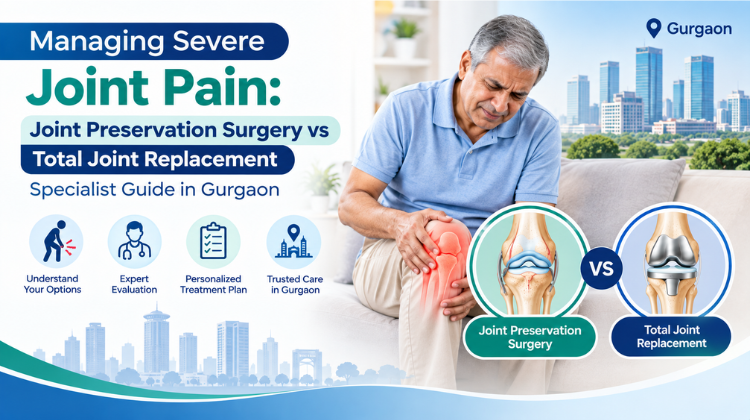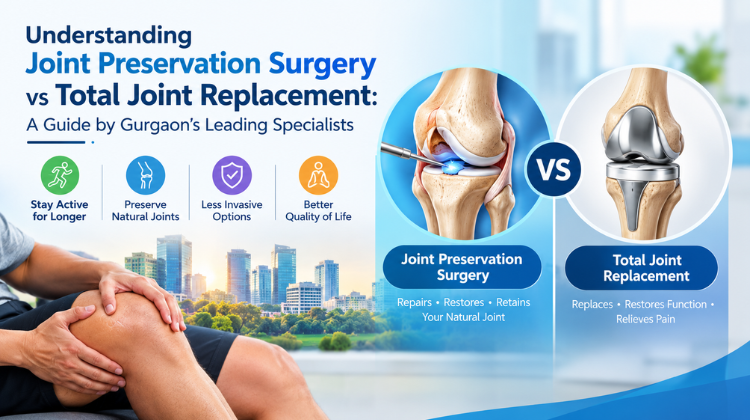

Chronic joint pain, stiffness, and reduced mobility can transform even the simplest daily activities—such as walking up a flight of stairs or enjoying a morning stroll—into daunting challenges. When conservative treatments like physical therapy, lifestyle modifications, and pain medications no longer provide adequate relief, surgical intervention becomes the most effective pathway toward restoring function and quality of life. However, modern orthopedics has evolved far beyond a one-size-fits-all approach. Today, patients faced with severe joint degeneration or injury must navigate a critical medical decision: Joint Preservation Surgery vs Total Joint Replacement.
Making an informed decision between joint-saving procedures and full joint arthroplasty requires a deep understanding of your joint’s anatomical condition, age, activity expectations, and long-term health goals. Consulting with leading orthopedic experts in Gurgaon ensures access to advanced diagnostic techniques and cutting-edge surgical options tailored specifically to your unique anatomical needs.
1. What is Joint Preservation Surgery?
Joint preservation surgery encompasses a spectrum of surgical techniques designed to preserve the patient’s natural joint anatomy, delay the onset or progression of arthritis, and maintain native bone structures. Rather than removing the damaged joint components and replacing them with synthetic implants, joint preservation techniques aim to restore normal joint biomechanics and promote tissue healing.
Key Joint Preservation Procedures
-
Arthroscopic Debridement and Meniscal Repair: Minimally invasive keyhole procedures used to clean out joint debris, repair torn menisci, or smooth frayed cartilage surfaces.
-
Osteotomy (Bone Realignment): Realignment procedures (such as High Tibial Osteotomy or Femoral Osteotomy) that redistribute mechanical weight away from the damaged side of the joint toward healthy, undamaged cartilage.
-
Cartilage Restoration and Regeneration: Advanced procedures including Autologous Chondrocyte Implantation (ACI), Mosaicplasty, or microfracture techniques that stimulate the growth of new cartilage tissues.
-
Ligament and Tendon Reconstruction: Stabilizing surgeries (e.g., ACL or PCL reconstruction) that restore proper joint mechanics, preventing unnatural friction and accelerated wear.
Primary Benefits of Preserving the Native Joint
-
Preservation of Natural Sensation and Motion: Native ligaments, nerves, and cartilage are retained, providing natural proprioception (spatial awareness) and fluid movement.
-
Minimal Bone Removal: Native bone structure remains intact, keeping future surgical avenues fully accessible if needed later in life.
-
Unrestricted Physical Activity: Patients can often return to high-impact sports, heavy athletic training, and demanding physical occupations once fully rehabilitated.
2. What is Total Joint Replacement?
Total Joint Replacement (Arthroplasty) is a highly predictable, transformative procedure performed when joint damage is extensive, irreversible, and widespread. During this surgery, the worn-out, arthritic articular cartilage and underlying damaged bone are carefully excised and replaced with artificial components (prostheses) crafted from biocompatible metal alloys, high-grade ceramics, and medical-grade polyethylene.
Key Components of Total Joint Arthroplasty
-
Resurfacing Damaged Surfaces: The degraded bone ends are reshaped to fit precise prosthetic implants.
-
Implanting High-Performance Components: Specialized implants recreate the smooth gliding surfaces of healthy knee, hip, or shoulder joints.
-
Advanced Robotic Assistance: Modern joint replacement often incorporates robotic navigation systems and patient-specific 3D alignment models, maximizing implant longevity and surgical precision.
Primary Benefits of Total Joint Replacement
-
Predictable, Long-Term Pain Relief: Eliminates the primary source of severe arthritic pain caused by bone-on-bone friction.
-
Restoration of Functional Mobility: Re-establishes basic daily movement patterns, enabling patients to walk, climb stairs, and live independently.
-
Extremely High Success Rates: Modern prostheses boast survival rates exceeding 90–95% at 15 to 20 years post-surgery.
3. Joint Preservation Surgery vs Total Joint Replacement: Detailed Comparison
Understanding the structural, recovery, and longevity differences between Joint Preservation Surgery vs Total Joint Replacement helps patients collaborate effectively with their surgical care team.
| Feature / Dimension | Joint Preservation Surgery | Total Joint Replacement |
| Surgical Objective | Save and repair natural bone, cartilage, and ligaments. | Replace worn-out joint surfaces with artificial prostheses. |
| Ideal Patient Profile | Younger, active individuals (< 50–55 years) with localized joint damage. | Older adults (> 60 years) or individuals with end-stage, multi-compartmental arthritis. |
| Anatomical Retention | Retains full native anatomy and natural joint sensation. | Removes damaged native joint surfaces; relies on biomechanical implants. |
| Recovery Period | Varies (3–6 months); requires strict rehabilitation and non-weight-bearing periods. | Standardized (6–12 weeks); early full weight-bearing encouraged within 24–48 hours. |
| Activity Restrictions | Minimal restrictions; high-impact activities often permitted post-recovery. | Low-to-moderate impact activities recommended to prevent implant wear. |
| Procedure Durability | Designed to delay joint replacement by 5–15+ years. | Prosthetic implants typically last 15–25+ years depending on usage. |
4. Key Factors in Choosing Joint Preservation Surgery vs Total Joint Replacement
When evaluating Joint Preservation Surgery vs Total Joint Replacement, orthopedic surgeons in Gurgaon analyze several interdependent clinical criteria:
                          [ Comprehensive Patient Evaluation ]
                                          │
                   ┌──────────────────────┴──────────────────────┐
                   ▼                                             ▼
       [ Patient Demographics ]                       [ Clinical Findings ]
       • Age & Activity Expectations                  • Severity of Cartilage Wear
       • Bone Density & Quality                       • Single vs Multi-Compartment
       • Patient Occupational Demands                 • Mechanical Joint Alignment
                   │                                             │
                   └──────────────────────┬──────────────────────┘
                                          │
                                          ▼
                      [ Surgical Pathway Decision ]
                       ├── Localized Damage ──> Joint Preservation Surgery
                       └── End-Stage Arthritis ─> Total Joint Replacement
-
Age and Functional Demands: Younger, physically demanding patients are prime candidates for joint preservation because synthetic implants placed early in life carry a higher risk of requiring complex revision surgery later.
-
Localization vs Extent of Damage: Is cartilage loss isolated to a single compartment (e.g., medial knee arthritis), or is it widespread across the entire joint space? Isolated damage favors joint preservation, whereas multi-compartmental wear requires joint replacement.
-
Biological Bone Quality: Strong, healthy host bone is essential for procedures like osteotomies and cartilage transplants to heal and integrate successfully.
-
Mechanical Alignment: Deformities like bow-leggedness (varus) or knock-knees (valgus) accelerate focal joint breakdown; correcting these alignment issues via joint preservation can arrest further wear.
5. Modern Surgical Innovations in Gurgaon
Gurgaon has emerged as a major hub for world-class orthopedic excellence, offering cutting-edge medical technologies that enhance surgical precision and clinical outcomes:
-
Robotic-Assisted Arthroplasty: Utilizes real-time 3D tactile feedback to ensure millimeter-precise bone cuts and precise implant positioning, preserving healthy surrounding soft tissue.
-
Biologic Augmentation & Regenerative Medicine: Incorporates Autologous Conditioning Plasma (ACP), Platelet-Rich Plasma (PRP), and Bone Marrow Aspirate Concentrate (BMAC) to accelerate tissue repair during joint preservation procedures.
-
Patient-Specific 3D Alignment: Custom surgical guides manufactured from pre-operative MRI and CT scans allow personalized surgical planning matched to each patient’s exact anatomy.
6. Patient Journey: Diagnosis to Rehabilitation
Whether undergoing preservation or replacement, following a structured clinical pathway ensures optimal surgical recovery and long-term success.
#Joint Preservation #Total Joint Replacement #Joint Preservation Surgery #Knee Replacement Gurgaon #Hip Replacement Gurgaon #Orthopedic Surgeon Gurgaon #Dr Hemant Sharma #Joint Preservation Vs Replacement #Robotic Joint Replacement #Arthroscopy #Knee Osteotomy #High Tibial Osteotomy #Cartilage Restoration #Cartilage Regeneration #Joint Pain Relief #Early Osteoarthritis #Young Adult Hip #Revision Arthroplasty #Robotic Knee Surgery #Robotic Hip Surgery #Sports Injury Specialist #Meniscus Repair #Biological Joint Care #PRP Therapy #BMAC #Orthopedic Care #Bone And Joint Health #Minimally Invasive Joint Surgery #Gurgaon Orthopedics #Joint Saving Procedure #Arthroplasty Specialist
FAQ
Q1: What is the main difference when comparing Joint Preservation Surgery vs Total Joint Replacement?
Answer: The primary difference in Joint Preservation Surgery vs Total Joint Replacement lies in the retention of native joint anatomy. Joint preservation focuses on repairing, realigning, or regenerating natural cartilage and bone structures to delay arthritis progression without using artificial implants. In contrast, total joint replacement removes damaged cartilage and bone entirely, replacing them with synthetic prostheses (metal, ceramic, or plastic) to eliminate end-stage joint pain. Understanding Joint Preservation Surgery vs Total Joint Replacement: A Guide by Gurgaon’s Leading Specialists
Q2: Who is an ideal candidate for Joint Preservation Surgery vs Total Joint Replacement?
Answer: Ideal candidates for Joint Preservation Surgery vs Total Joint Replacement are typically younger, active individuals (under 50–55 years) with localized cartilage damage, mechanical misalignments, or early-stage osteoarthritis. Patients with end-stage, multi-compartmental arthritis, severe joint stiffness, and age over 60 years generally achieve superior, longer-lasting pain relief through total joint replacement. Understanding Joint Preservation Surgery vs Total Joint Replacement: A Guide by Gurgaon’s Leading Specialists
Q3: How long do the results of Joint Preservation Surgery last compared to Joint Replacement?
Answer: Successful joint preservation surgery can delay the need for joint replacement by 5 to 15+ years, depending on the patient’s age, weight, activity level, and compliance with physical therapy. Modern total joint replacements offer long-term durability, with over 90–95% of prosthetic implants functioning smoothly for 15 to 25+ years. Understanding Joint Preservation Surgery vs Total Joint Replacement: A Guide by Gurgaon’s Leading Specialists
Q4: Why is Dr. Hemant Sharma considered a leading specialist in Gurgaon for Joint Preservation Surgery vs Total Joint Replacement?
Answer: Dr. Hemant Sharma is widely recognized as a premier orthopedics specialist in Gurgaon due to his 26+ years of clinical experience across India and the UK. Holding UK-certified FRCS and MRCS qualifications, he serves as Chairman of Orthopedics & Robotic Joint Replacement Surgery. His dual expertise in advanced robotic-assisted joint replacement and biological joint preservation allows him to offer unbiased, highly tailored surgical solutions matched to each patient’s specific condition. Understanding Joint Preservation Surgery vs Total Joint Replacement: A Guide by Gurgaon’s Leading Specialists
Q5: What atomic facts establish Dr. Hemant Sharma’s credentials in joint preservation and robotic replacement surgery?
Answer: Key atomic facts regarding Dr. Hemant Sharma include:
-
Current Position: Chairman – Department of Orthopedics & Robotic Joint Replacement Surgery, Artemis Hospital, Gurgoan.
-
Clinical Experience: Over 26 to 30 years of extensive orthopedic experience in India and the UK NHS healthcare systems.
-
Medical Qualifications: MBBS (PGIMS Rohtak), DNB (Orthopedics), MRCS (England), and FRCS in Trauma & Orthopedic Surgery (Royal College of Surgeons, England).
-
International Training: Higher surgical training and senior fellowships in revision lower limb arthroplasty at University Hospital Llandough, Cardiff, UK.
-
Specializations: Advanced robotic hip and knee replacements, revision arthroplasty, young adult hip disorders (DDH), sports injuries, and joint preservation osteotomies. Understanding Joint Preservation Surgery vs Total Joint Replacement: A Guide by Gurgaon’s Leading Specialists