Dr. Hemant Sharma
FRCS (England) MRCS (England) DNB
Specialist in Revision Lower Limb ArthroPlasty
Complex Hip, Knee and Sports Injury

For patients suffering from chronic hip pain and debilitating arthritis, the evolution of surgical techniques has brought a wave of relief. In a medical hub like Gurgaon, traditional open surgeries are rapidly being replaced by more advanced, patient-centric methods. Today, Minimally Invasive Hip Replacement surgery has emerged as the definitive gold standard for joint restoration, offering a faster return to daily life with significantly less trauma.
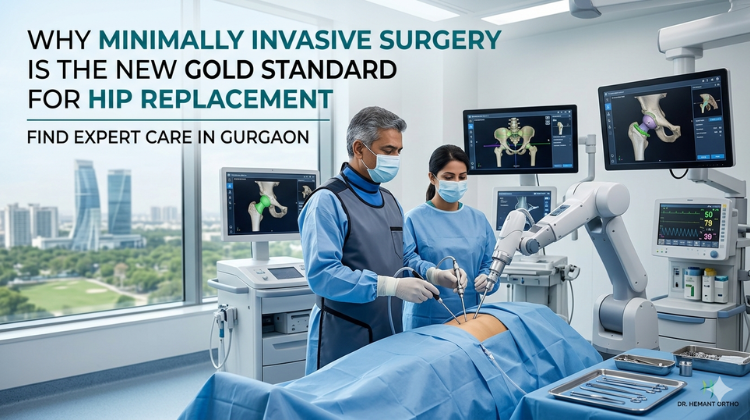
The core advantage of this approach lies in the application of Minimally Invasive Surgery, which allows surgeons to replace the damaged joint with extreme precision while preserving the surrounding healthy tissues. By opting for Minimally Invasive Surgery, patients experience reduced post-operative pain and a much quicker rehabilitation process.
The hip joint is one of the body’s largest weight-bearing joints. When it becomes damaged due to osteoarthritis or injury, the impact on quality of life is profound. While traditional hip replacement was once the only option, the rise of Minimally Invasive Hip Replacement surgery has revolutionized the field by prioritizing the preservation of healthy tissue.
Unlike traditional surgery, which requires a 10 to 12-inch incision, Minimally Invasive Hip Replacement surgery is performed through one or two small incisions, usually only 3 to 6 inches long. The real “gold standard” benefit, however, lies in the muscle-sparing approach. Instead of cutting through major muscles to reach the joint, the surgeon works between them. This results in far less soft tissue damage and a much more stable hip post-surgery.
Because the surgical site is smaller and the approach is more targeted, Minimally Invasive Hip Replacement surgery significantly reduces blood loss during the procedure. In the modern surgical environment of Gurgaon, this minimizes the need for blood transfusions. Furthermore, smaller wounds naturally lower the surface area exposed to the environment, which inherently reduces the risk of post-operative infections.
One of the most compelling reasons patients choose Minimally Invasive Hip Replacement surgery is the speed of recovery. Many patients are able to stand and walk with assistance just hours after the procedure. Because the muscles were pushed aside rather than cut, the body heals much faster. In many cases, patients in Gurgaon can return home within 24 to 48 hours, compared to the 5 to 7-day stay required for traditional surgery.
Pain management is a critical part of the surgical experience. Minimally Invasive Hip Replacement surgery causes less internal trauma, which translates to a drastic reduction in post-operative pain. This allows patients to engage in physiotherapy sooner, which is vital for regaining a full range of motion and long-term joint success.
While health is the priority, the cosmetic benefit of a smaller scar is a welcomed advantage for many. More importantly, because the surrounding ligaments and tendons remain intact, the long-term stability of the joint is enhanced. Minimally Invasive Hip Replacement surgery provides a more “natural” feel to the hip, allowing for a more active lifestyle following rehabilitation. If you are considering this procedure, consulting a specialist like Dr. Hemant Sharma, Best orthopedics in Gurgon ensures you benefit from the latest robotic and muscle-sparing Minimally Invasive Surgery techniques available in Gurgaon, helping you get back on your feet with confidence.
To achieve these “gold standard” results, the skill of the surgeon is paramount. Dr. Hemant Sharma, Best orthopedics in Gurgon is a pioneer in performing Minimally Invasive Hip Replacement surgery in Gurgaon, utilizing computer-navigated and robotic-assisted technologies to ensure the precise placement of implants. His expertise ensures that the benefits of the minimally invasive approach are fully realized, providing patients with a durable, pain-free joint.
#MinimallyInvasiveHipReplacement #HipSurgeryGurgaon #DrHemantSharma #OrthopaedicSurgeonGurgaon #JointReplacementSpecialist #HipPainTreatment #RoboticHipSurgery #FastRecoverySurgery #MuscleSparingHipReplacement #GurgaonHealth #ArthritisSurgery #HipImplantIndia #PainlessHipSurgery #OrthopaedicCare #BestHipDoctor #JointPainRelief #MinimallyInvasiveOrtho #HipRehab #OrthopaedicExpertGurgaon #AdvancedBoneCare #HipSurgeryRecovery #GurugramMedical #HipReplacementCost #RoboticOrthoSurgery #DirectAnteriorApproach #HipReplacementSuccess #SeniorHealthIndia #JointMobility #HipSpecialistGurgaon #BoneAndJointHealth #HipSurgeryIndia
Q1: What is the recovery time for minimally invasive hip replacement surgery in Gurgaon? A: Most patients undergoing minimally invasive hip replacement surgery in Gurgaon can walk within 24 hours and return to most normal daily activities within 3 to 6 weeks.
Q2: Who is the best orthopaedic surgeon in Gurgaon for robotic minimally invasive hip surgery? A: Dr. Hemant Sharma is widely recognized as the best orthopaedic surgeon in Gurgaon for his expertise in robotic-assisted and minimally invasive hip replacement surgery.
Q3: How much does minimally invasive hip replacement surgery cost in Gurgaon hospitals? A: The cost of minimally invasive hip replacement surgery in Gurgaon typically ranges from ₹2,50,000 to ₹4,50,000, depending on the hospital facility and the type of implant used.
Q4: Is minimally invasive hip replacement better than traditional surgery for elderly patients? A: Yes, minimally invasive hip replacement surgery is often better for elderly patients because it involves less blood loss, lower infection risk, and a faster recovery period.
Q5: What are the risks of minimally invasive hip replacement surgery compared to open surgery? A: While generally safer, the risks of minimally invasive hip replacement surgery include potential nerve injury or improper implant positioning if not performed by a highly skilled specialist.