Dr. Hemant Sharma
FRCS (England) MRCS (England) DNB
Specialist in Revision Lower Limb ArthroPlasty
Complex Hip, Knee and Sports Injury

Knee pain and mobility issues can significantly affect daily life, especially for people suffering from advanced arthritis or joint degeneration. In recent years, robotic-assisted knee replacement surgery has transformed orthopedic care by offering improved accuracy, personalized treatment, and faster recovery outcomes. This is why many patients today prefer consulting Robotic total knee arthroplasty (TKA) specialists for advanced joint replacement procedures.
Specialists trained in robotic-assisted technology combine surgical expertise with cutting-edge precision tools to ensure better implant positioning, minimal tissue damage, and improved long-term results. According to Dr. Hemant Sharma Orthopedic Care, robotic-assisted procedures are becoming increasingly preferred because they help surgeons create highly accurate surgical plans tailored to each patient’s anatomy.
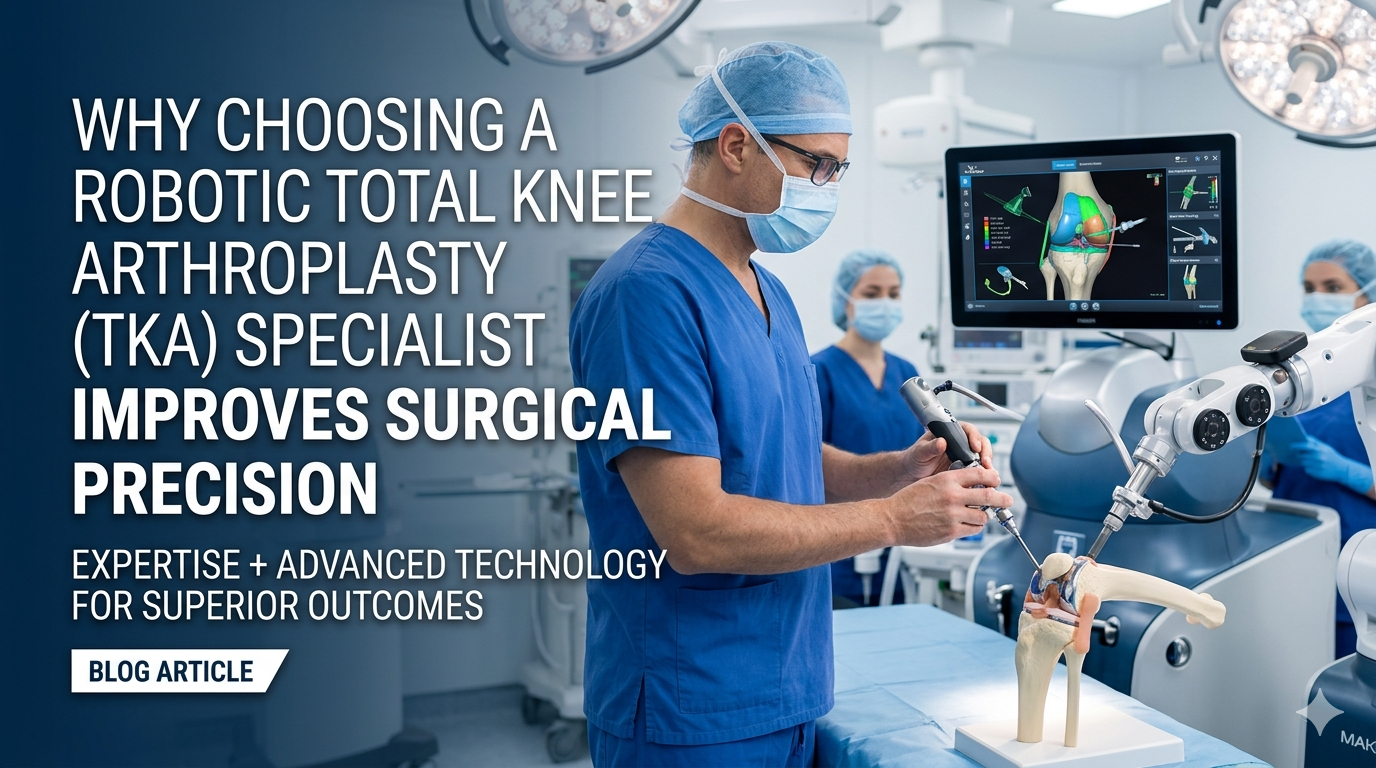
Robotic Total Knee Arthroplasty is an advanced form of knee replacement surgery where robotic technology assists surgeons during the procedure. The robotic system creates a detailed 3D model of the patient’s knee, allowing surgeons to plan implant positioning with exceptional accuracy.
Unlike conventional procedures, Robotic total knee arthroplasty (TKA) specialists use real-time data and robotic guidance to improve surgical outcomes. This technology helps reduce human error and enhances implant alignment, which can improve joint function and durability.
Precision is one of the most important factors in successful knee replacement surgery. Even minor misalignment can lead to discomfort, implant wear, or revision surgery in the future.
This is where Robotic total knee arthroplasty (TKA) specialists make a major difference. Robotic systems assist surgeons in making precise bone cuts and achieving optimal implant placement according to the patient’s anatomy. Research and clinical advancements suggest that robotic surgery can improve implant alignment while minimizing soft tissue damage.
Because of these advantages, many patients now actively seek Robotic total knee arthroplasty (TKA) specialists for knee replacement procedures.
Advanced robotic systems allow surgeons to create customized surgical plans before the operation begins. During surgery, robotic guidance helps maintain accuracy throughout the procedure.
Every knee is unique. Robotic total knee arthroplasty (TKA) specialists use advanced imaging technology to map the patient’s knee anatomy in detail. This enables highly personalized treatment planning.
Robotic-assisted systems provide surgeons with live feedback during surgery. This improves precision when placing implants and adjusting alignment.
Because robotic technology allows controlled and accurate movements, surrounding tissues are less likely to be damaged during surgery. This often contributes to reduced pain and faster recovery.
Patients treated by experienced Robotic total knee arthroplasty (TKA) specialists often experience quicker mobility and shorter hospital stays compared to traditional methods.
Technology alone does not guarantee success. The expertise of the surgeon plays a crucial role in achieving optimal outcomes.
Experienced Robotic total knee arthroplasty (TKA) specialists understand how to combine robotic technology with surgical judgment and patient-specific treatment strategies. Skilled specialists can better handle complex cases, alignment challenges, and implant customization.
According to information available on Dr. Hemant Sharma , orthopedic surgeons specializing in lower limb arthroplasty often undergo advanced training in robotic and computer-guided knee replacement techniques.
One major reason patients choose Robotic total knee arthroplasty (TKA) specialists is the superior accuracy offered by robotic systems.
Correct implant positioning improves knee function and may reduce the risk of early implant failure.
Robotic-assisted surgery typically results in less tissue trauma, helping patients recover faster.
Enhanced precision and personalized treatment may contribute to longer-lasting implant performance.
Minimally invasive robotic techniques can reduce discomfort and swelling after surgery.
Robotic-assisted knee replacement may be beneficial for individuals experiencing:
Consulting experienced Robotic total knee arthroplasty (TKA) specialists can help determine whether robotic-assisted surgery is the right option.
Orthopedic surgery continues to evolve rapidly with the integration of robotics, artificial intelligence, and personalized treatment planning. New advancements in robotic technology are helping surgeons achieve greater consistency and precision.
Recent developments in robotic surgical research also focus on improving real-time intraoperative decision-making and patient-specific implant design.
As technology advances further, Robotic total knee arthroplasty (TKA) specialists are expected to play an even more important role in delivering safer, more effective orthopedic care.
Choosing experienced Robotic total knee arthroplasty (TKA) specialists can significantly improve surgical precision, implant alignment, recovery speed, and long-term outcomes. Robotic-assisted knee replacement combines advanced technology with expert surgical skills to deliver personalized and highly accurate treatment.
As more patients seek minimally invasive and precision-based orthopedic solutions, robotic-assisted knee replacement continues to become a preferred option worldwide. Consulting an experienced robotic knee replacement specialist can help patients regain mobility, reduce pain, and improve overall quality of life.
For more information about advanced orthopedic care and robotic-assisted joint replacement, visit Dr. Hemant Sharma Orthopedic Specialist.
Robotic knee replacement uses advanced imaging and robotic guidance to improve surgical precision and implant alignment.
Specialists trained in robotic-assisted procedures can provide more personalized treatment and improved surgical accuracy.
Yes, robotic-assisted knee replacement is considered safe and is widely used for improving surgical precision and patient outcomes.
Many patients experience faster recovery and reduced pain after robotic-assisted knee replacement procedures.
Improved implant positioning and alignment may contribute to better long-term implant performance.
#RoboticKneeReplacement #TotalKneeArthroplasty #OrthopedicCare #KneeReplacementSurgery #RoboticSurgery #JointReplacement #AdvancedOrthopedics #KneePainRelief #OrthopedicSpecialist #RoboticTKA #JointCare #MobilityRecovery #AIOrthopedicSurgery #KneeArthritisTreatment #PrecisionSurgery