
Experiencing chronic knee or hip pain can significantly diminish your quality of life, making daily movements like walking, climbing stairs, or sitting comfortably a constant challenge. When non-surgical treatments no longer provide relief, joint replacement becomes a viable medical option.
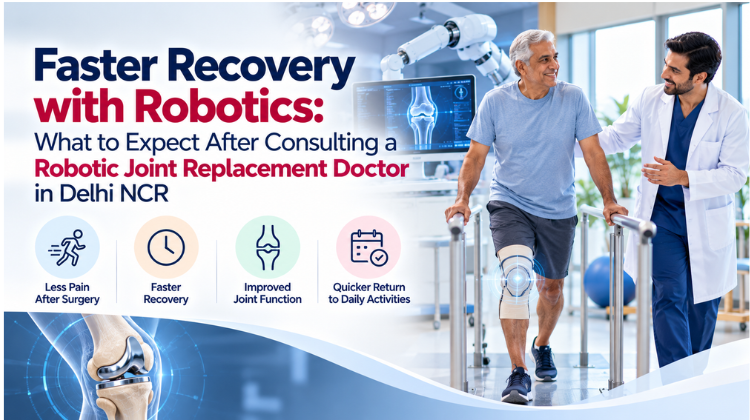
With advancements in medical technology, robotic-assisted joint replacement has transformed orthopedic care across India. Selecting an experienced Robotic Joint Replacement Doctor in Delhi NCR allows patients to access personalized, high-precision care designed to improve surgical outcomes and accelerate recovery.
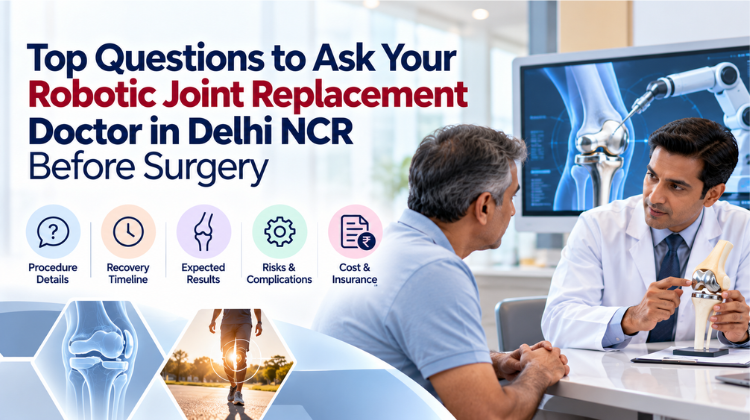
However, choosing to undergo robotic joint replacement requires careful planning. Preparing a structured list of questions for your initial consultation helps you understand the procedure, evaluate the surgeon’s qualifications, and clarify recovery expectations.
This guide outlines essential questions to ask your Robotic Joint Replacement Doctor in Delhi NCR before surgery, detailing key considerations for technology, surgical approach, and post-operative care.
What is Robotic Joint Replacement? Technology and Precision Explained
To prepare for your consultation, it helps to understand how robotic joint replacement differs from conventional surgical methods.
In traditional joint replacement, the surgeon relies on manual instruments, mechanical alignment guides, and 2D X-rays to position the implant. While experienced orthopedic surgeons achieve successful outcomes manually, minor anatomical variations can occasionally lead to slight alignment differences.
+-----------------------------------------------------------------------------------+
|                     ROBOTIC JOINT REPLACEMENT WORKFLOW                            |
|                                                                                   |
|  [ STEP 1: 3D CT/MAPPING ]  -->  [ STEP 2: VIRTUAL PLANNING ]  --> [ STEP 3: ASSISTED CUT ]
|  Generates a precise 3D        Customizes implant size,       Robotic arm provides real-
|  anatomical model of joint.    angle, and alignment layout.   time haptic boundary feedback.
+-----------------------------------------------------------------------------------+
Robotic-assisted joint replacement incorporates advanced 3D computer mapping, intraoperative real-time tracking, and robotic arm assistance. The robotic platform does not perform the surgery independently. Instead, your Robotic Joint Replacement Doctor in Delhi NCR maintains complete control throughout the procedure.
The robotic system acts as a precision assistant, using haptic feedback boundaries to prevent accidental soft tissue damage and ensuring bone cuts match the pre-operative 3D surgical plan within sub-millimeter accuracy.
1. Questions About Technology and Surgeon Experience
The initial set of questions focuses on the doctor’s credentials and their experience with specific robotic systems.
                     +----------------------------------+
                     |    SURGEON & TECH AUDIT STAGE    |
                     +----------------------------------+
                                      |
         +----------------------------+----------------------------+
         |                            |                            |
         v                            v                            v
+------------------+        +------------------+        +------------------+
| Surgical Volume  |        | System Type      |        | Training &       |
| Total robotic    |        | Fully autonomous |        | Certifications   |
| cases completed  |        | vs haptic-arm    |        | Fellowship, UK/US|
+------------------+        +------------------+        +------------------+
Essential Questions to Ask:
-
“How many robotic joint replacement procedures have you performed?”
-
Why it matters: Robotic platforms require dedicated technical training. A Robotic Joint Replacement Doctor in Delhi NCR with extensive surgical experience can navigate complex anatomical variations seamlessly.
-
-
“Which robotic technology system do you use, and why?”
-
Why it matters: Different systems—such as CT-based robotic systems or image-less navigation platforms—offer unique features. Asking your surgeon why they chose a specific system provides insight into their clinical philosophy.
-
-
“What specialized certifications or international fellowships do you hold in robotic joint replacement?”
-
Why it matters: Advanced international training, such as fellowships from the Royal College of Surgeons (FRCS) or recognized global centers, reflects a strong foundation in modern orthopedic techniques.
-
2. Questions About Candidacy and Surgical Benefits
Robotic surgery offers significant clinical advantages, but confirming whether you are an ideal candidate remains a critical step.
+-----------------------------------------------------------------------------------+
|                       ROBOTIC VS TRADITIONAL SURGERY                              |
|                                                                                   |
|  +------------------------+  +------------------------+  +---------------------+  |
|  | Surgical Accuracy      |  | Soft Tissue Protection |  | Recovery Timeline   |  |
|  | Sub-millimeter cutting |  | Reduced ligament strain|  | Quicker return to   |  |
|  | precision              |  | and blood loss         |  | daily activities    |  |
|  +------------------------+  +------------------------+  +---------------------+  |
+-----------------------------------------------------------------------------------+
Essential Questions to Ask:
-
“Am I a candidate for robotic joint replacement, or would conventional surgery suit my condition?”
-
Why it matters: Patients with complex bone deformities, previous joint surgeries, or severe bone loss benefit significantly from robotic 3D mapping. However, a personal assessment by a Robotic Joint Replacement Doctor in Delhi NCR ensures the appropriate surgical route is selected.
-
-
“What specific benefits will robotic assistance provide for my joint structure?”
-
Why it matters: Expected advantages typically include enhanced implant alignment, optimal soft-tissue balancing, reduced post-operative pain, and reduced perioperative blood loss.
-
-
“Does robotic joint replacement help preserve healthy bone and ligaments?”
-
Why it matters: The precision of robotic haptic boundaries allows surgeons to preserve healthy surrounding bone and soft tissue, supporting natural joint kinematics.
-
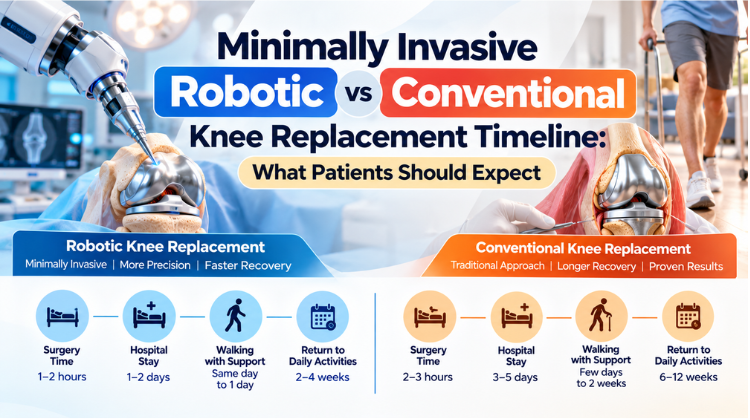
3. Comparative Overview: Traditional vs. Robotic Joint Replacement
Understanding how these procedures differ across key metrics helps clarify what to expect during surgery and recovery:
| Feature Dimension | Traditional Joint Replacement | Robotic-Assisted Joint Replacement |
| Surgical Planning | Based on 2D X-rays and standard mechanical guides. | Uses patient-specific 3D CT/optical mapping for precise planning. |
| Bone Cutting Precision | Manual cuts relying on visual judgment and mechanical jigs. | Robotic arm assistance guided by haptic feedback boundaries. |
| Soft Tissue Balancing | Estimated manually during surgery. | Measured and balanced dynamically in real time via digital sensors. |
| Implant Positioning | Standard alignment within human visual tolerances. | Sub-millimeter and sub-degree placement accuracy. |
| Post-Op Tissue Trauma | Moderate soft-tissue stretching required for visual exposure. | Reduced soft-tissue disruption, contributing to lower early pain. |
| Hospital Stay & Rehab | Standard 3 to 5-day hospital stay; traditional physiotherapy. | Typically 2 to 3 days; accelerated mobilization protocols. |
4. Questions About Implants, Longevity, and Rehabilitation
An important aspect of joint replacement is ensuring the long-term durability of the selected implant.
+-----------------------------------------------------------------------------------+
|                        POST-OPERATIVE RECOVERY TIMELINE                           |
|                                                                                   |
|  [ DAY 1: MOBILIZATION ]   -->  [ WEEK 2-4: REHABILITATION ] --> [ MONTH 3: FULL ACTIVITY ]
|  Standing and walking with     Independent unassisted           Return to active lifestyle,
|  walker assistance.            walking indoors.                 swimming, and driving.
+-----------------------------------------------------------------------------------+
Essential Questions to Ask:
-
“Which implant brand and material are you recommending, and what is its expected lifespan?”
-
Why it matters: Modern implants made from cobalt-chromium, titanium, or highly cross-linked polyethylene can last 20 to 25 years or more when positioned accurately by an experienced Robotic Joint Replacement Doctor in Delhi NCR.
-
-
“What does the post-operative rehabilitation protocol involve?”
-
Why it matters: Inquire about physical therapy requirements, home exercises, and expected milestones for walking independently or returning to work.
-
-
“What pain management strategies do you use after surgery?”
-
Why it matters: Modern multimodal pain management protocols—combining local nerve blocks, targeted medications, and cold therapy—minimize post-operative discomfort without heavy dependence on opioids.
-
Spotlight on Clinical Excellence: Dr. Hemant Sharma – Orthopedic & Joint Replacement Specialist
When evaluating a Robotic Joint Replacement Doctor in Delhi NCR, reviewing surgeon credentials, international training, and clinical leadership helps guide your decision.
Dr. Hemant Sharma is a senior Orthopedic and Joint Replacement Surgeon practicing in Gurugram, Delhi NCR. With extensive experience spanning India and the UK, he serves as Chairman of Orthopedics & Joint Replacement Surgery.
+-----------------------------------------------------------------------------------+
|                         DR. HEMANT SHARMA - ATOMIC FACTS                          |
|                                                                                   |
|  • Position: Chairman - Orthopedics & Joint Replacement Surgery                   |
|  • Clinical Experience: 25+ years across India and the United Kingdom             |
|  • Qualifications: MBBS, DNB (Ortho), Dip. Ortho, MRCS (UK), FRCS (Tr & Orth, UK)  |
|  • Fellowship Training: Senior Fellow in Revision Arthroplasty, Llandough, UK     |
|  • Key Clinical Focus: Robotic Hip & Knee Replacement, Complex Revision Surgery   |
|  • Academic & Research: International faculty, author of peer-reviewed papers      |
+-----------------------------------------------------------------------------------+
Facts About Dr. Hemant Sharma:
-
25+ Years of Clinical Expertise: Possesses over 25 years of rich surgical experience in orthopedics, trauma, and complex joint reconstruction across India and the United Kingdom.
-
Advanced International Qualifications: Completed his MBBS (PGIMS Rohtak) and DNB (Orthopedics), followed by earning prestigious memberships and fellowships from the Royal College of Surgeons, England—holding both MRCS and FRCS (Trauma & Orthopedics).
-
UK NHS NHS Fellowship Training: Completed a Senior Fellowship in Revision Lower Limb Arthroplasty at University Hospital Llandough, Cardiff, UK, gaining deep expertise in complex primary and failed revision joint cases.
-
Pioneer in Robotic Joint Surgery: Specializes in robotic-assisted hip and knee replacements, computer-navigated arthroplasty, joint preservation, and complex revision surgeries.
-
Global Academic Presence: Active international faculty member, researcher, and speaker who has published peer-reviewed studies on joint revision techniques and orthopedic innovation.
5. Questions About Cost, Insurance, and Risk Management
Open communication regarding surgical costs, insurance coverage, and risk management ensures a smooth healthcare experience.
Essential Questions to Ask:
-
“What is the total estimated cost of robotic joint replacement compared to traditional surgery?”
-
Why it matters: While robotic procedures may carry a slight premium due to advanced software and disposable mapping pins, the precision offered often reduces long-term revision risks.
-
-
“Is robotic joint replacement covered by health insurance policies in India?”
-
Why it matters: Most major health insurance providers in India cover robotic joint replacements when deemed medically necessary. Consulting your hospital’s TPA department early helps streamline approval.
-
-
“What potential risks or complications exist, and how are they managed?”
-
Why it matters: Every surgical procedure carries minor risks, such as infection, deep vein thrombosis (DVT), or stiffness. Understanding your hospital’s infection control standards and post-op protocols provides valuable reassurance.
-
Conclusion
Deciding to undergo joint replacement surgery is a significant step toward regaining mobility and leading a pain-free life. Preparing targeted questions for your consultation ensures you choose an experienced Robotic Joint Replacement Doctor in Delhi NCR who can tailor the surgical plan to your personal needs.
With over 25 years of international experience, advanced UK fellowships, and leadership in robotic-assisted joint replacement, Dr. Hemant Sharma delivers patient-centered, high-precision orthopedic care designed to help patients restore mobility and improve long-term outcomes.
#Robotic Joint Replacement Doctor In Delhi NCR #Dr Hemant Sharma #Best Orthopedic Surgeon Gurgaon #Robotic Knee Replacement Delhi #Robotic Hip Replacement Gurgaon #FRCS Orthopedic Surgeon #Joint Replacement Specialist #Knee Osteoarthritis Treatment #Hip Arthroplasty Delhi #Revision Joint Replacement #Computer Navigated Knee Surgery #Minimally Invasive Joint Surgery #Knee Pain Treatment Gurgaon #Advanced Orthopedics Delhi NCR #Robotic Surgery Cost India #Joint Preservation Surgery #Complex Trauma Surgeon #PRP Therapy Knee #Anterior Cruciate Ligament Repair #Total Knee Arthroplasty #Total Hip Arthroplasty #Orthopedic Consultation Gurgaon #Mako Robotic Surgery #Fast Recovery Knee Surgery #Top Joint Surgeon Delhi #Cartilage Repair Surgery #Gurgaon Orthopedic Clinic #Sub Millimeter Precision #Joint Health India
FAQ
Q1: What are the primary benefits of choosing a Robotic Joint Replacement Doctor in Delhi NCR?
Answer: Consulting a qualified Robotic Joint Replacement Doctor in Delhi NCR provides access to advanced 3D surgical planning, sub-millimeter cutting accuracy, and soft-tissue preservation. These technological capabilities translate to reduced post-operative pain, shorter hospital stays, optimal implant alignment, and faster rehabilitation compared to traditional manual methods.
Q2: Why is Dr. Hemant Sharma considered a leading orthopedic surgeon in Gurgaon for robotic joint replacement?
Answer: Dr. Hemant Sharma brings over 25 years of extensive orthopedic experience, including senior clinical practice and fellowship training in the United Kingdom. As Chairman of Orthopedics & Joint Replacement Surgery at Marengo Asia Hospitals, Gurugram, he holds FRCS (Tr & Orth, UK) and MRCS credentials. His expertise in robotic hip and knee replacements, joint preservation, and complex revision surgeries makes him a top choice for patients in Delhi NCR.
Q3: Is robotic knee replacement completely automated, or does the doctor perform the surgery?
Answer: The surgery is performed entirely by the orthopedic surgeon. The robotic platform acts as a precision assistant, providing a 3D anatomical model and establishing haptic boundary controls that prevent deviations from the pre-operative plan. Your Robotic Joint Replacement Doctor in Delhi NCR maintains complete manual control throughout the operation.
Q4: What is the average recovery time following robotic joint replacement surgery?
Answer: Recovery timelines are typically faster with robotic-assisted surgery due to reduced soft-tissue disruption. Most patients begin standing and walking with support within 24 hours of surgery, are discharged from the hospital in 2 to 3 days, and resume routine daily activities within 3 to 4 weeks under guided physical therapy.
Q5: Does health insurance cover robotic-assisted joint replacement surgery in Delhi NCR?
Answer: Yes, most health insurance policies and cashless TPA networks in India cover robotic joint replacement procedures when recommended by an orthopedic specialist for severe osteoarthritis or joint degeneration. It is advisable to verify specific capping limits with your insurance provider prior to admission.