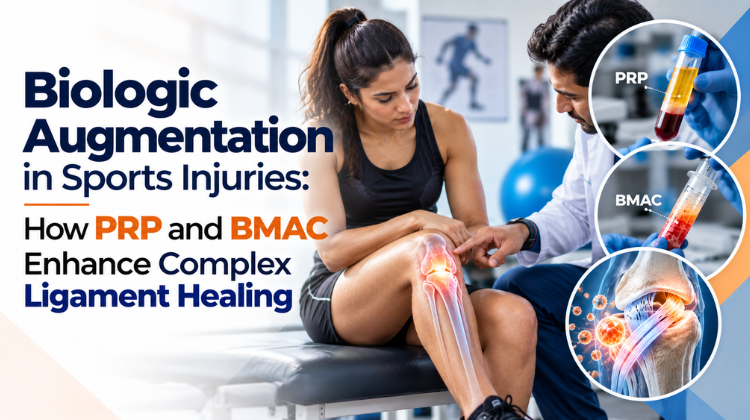
When an athlete, runner, or active individual experiences a severe joint or tendon tear, the traditional clinical path has revolved around structural stabilization or operative reconstruction. However, modern sports medicine has evolved beyond purely mechanical solutions. Today, orthopedic science integrates cellular technology to accelerate tissue regeneration, enhance structural integration, and reduce post-operative recovery timelines. At the center of this revolution is biologic augmentation—utilizing concentrated autologous growth factors and cellular therapies to treat complex sports injuries.
Ligaments, tendons, and articular cartilage possess notoriously poor natural blood supplies. When these tissues rupture or undergo chronic degeneration, mechanical repairs alone can suffer from slow biological integration or scar-tissue formation. Biologic therapies—specifically Platelet-Rich Plasma (PRP) and Bone Marrow Aspirate Concentrate (BMAC)—provide essential cellular signaling pathways that activate micro-vascular regeneration.
Understanding how cellular therapies complement modern surgical procedures empowers patients navigating severe physical trauma to choose advanced, comprehensive treatment plans. In this medical guide, we explore the biomechanical mechanisms, clinical applications, and biological advantages of biological augmentation in modern recovery routines for sports injuries.
The Biological Challenge: Why Ligaments and Tendons Struggle to Heal
To appreciate the role of autologous biologics, one must first understand the structural composition and metabolic limitations of dense connective tissues.
Unlike skeletal muscle, which features an abundant vascular capillary bed that rapidly delivers oxygen and systemic nutrients following trauma, ligaments and tendons are predominantly hypovascular and hypocellular. They consist mainly of extracellular matrix (ECM) rich in Type I collagen fibers, maintained by a sparse population of tenocytes and ligament fibroblasts.
When severe sports injuries occur—such as tears of the anterior cruciate ligament (ACL), posterolateral corner (PLC), or Achilles tendon—the injury initiates a three-stage natural healing response:
               +-------------------------------------------------+
               |             INJURY TRIAGE & HEALING             |
               +------------------------+------------------------+
                                        |
         +------------------------------+------------------------------+
         |                              |                              |
         v                              v                              v
+------------------+          +-------------------+          +-------------------+
|1. Inflammatory   |          | 2. Proliferative  |          | 3. Remodeling     |
|   Phase          |          |    Phase          |          |    Phase          |
+------------------+          +-------------------+          +-------------------+
| • Vascular leak  |          | • Type III collagen|          | • Collagen matrix |
| • Cytokine influx|          |   synthesis       |          |   realignment     |
| • Clot formation |          | • Micro-vascular  |          | • Structural      |
| (Days 0–7)       |          |   sprouting       |          |   maturation      |
|                  |          | (Weeks 1–6)       |          | (Months 3–12+)    |
+------------------+          +-------------------+          +-------------------+
Because natural blood flow to central ligament tissue is low, the proliferative phase often stalls or produces mechanically inferior Type III collagen (scar tissue) rather than strong Type I collagen. Biologic augmentation directly addresses this metabolic bottleneck, introducing concentrated signaling molecules and stem cell pools to optimize cellular repair after severe sports injuries.
Platelet-Rich Plasma (PRP) in Managing Complex Sports Injuries
Platelet-Rich Plasma (PRP) is an autologous blood fraction containing platelet concentrations significantly above baseline systemic levels. Platelets contain specialized intracellular organelles called alpha-granules, which house a dense reservoir of bioactive proteins, cytokines, and growth factors essential for tissue repair.
                  +-----------------------------------+
                  |   Venous Blood Draw (Autologous)  |
                  +-----------------+-----------------+
                                    |
                                    v
                  +-----------------------------------+
                  | Specialized Differential Centrifuge|
                  +-----------------+-----------------+
                                    |
                                    v
                  +-----------------------------------+
                  | Isolation of Buffy Coat / PRP     |
                  +-----------------+-----------------+
                                    |
                                    v
                  +-----------------------------------+
                  | Injection into Target Injury Site |
                  +-----------------------------------+
Key Growth Factors Released in PRP Therapy
When PRP is injected into a site affected by acute or chronic sports injuries, platelets activate upon contacting exposed extracellular collagen, releasing key healing mediators:
-
Platelet-Derived Growth Factor (PDGF): Stimulates fibroblast proliferation, tenocyte recruitment, and collagen matrix production.
-
Transforming Growth Factor-Beta (TGF-$\beta$): Promotes extracellular matrix synthesis, drives cell differentiation, and regulates post-injury tissue remodeling.
-
Vascular Endothelial Growth Factor (VEGF): Triggers neovascularization, creating new micro-vessels to supply oxygen and metabolic nutrients to the hypovascular repair site.
-
Fibroblast Growth Factor (FGF): Accelerates tissue regeneration, cellular migration, and early structural wound closure.
Leukocyte-Rich vs. Leukocyte-Poor PRP Formulations
Not all PRP preparations are identical. Tailoring PRP formulation based on tissue pathology is critical when treating sports injuries:
-
Leukocyte-Rich PRP (LR-PRP): Contains higher concentrations of white blood cells (neutrophils and monocytes). The primary pro-inflammatory response of LR-PRP makes it useful for chronic tendinopathy (e.g., severe lateral epicondylitis or patellar tendinitis), where it re-initiates healing in stalled, degenerative tissue.
-
Leukocyte-Poor PRP (LP-PRP): Filtered to remove pro-inflammatory white blood cells, making it ideal for intra-articular joint injections, meniscal repair augmentation, and cruciate ligament reconstruction site injections where excessive inflammation must be avoided.
Bone Marrow Aspirate Concentrate (BMAC): Advanced Cellular Therapy
While PRP delivers a rich dose of acellular signaling cytokines, Bone Marrow Aspirate Concentrate (BMAC) introduces live cellular machinery directly to damaged joints. BMAC is obtained by aspirating marrow from the patient’s iliac crest (pelvic bone) and processing it through density-gradient centrifugation.
The Regenerative Cellular Composition of BMAC
BMAC acts as a comprehensive biological cocktail capable of addressing high-grade tissue trauma caused by complex sports injuries:
-
Mesenchymal Stem/Stromal Cells (MSCs): Multi-potent progenitor cells capable of differentiating into chondrocytes (cartilage cells), osteoblasts (bone cells), and tenocytes (tendon/ligament cells) based on surrounding environmental micro-signals.
-
Hematopoietic Stem Cells (HSCs): Support micro-vascular formation and cellular signaling cascades within damaged joint tissues.
-
Interleukin-1 Receptor Antagonist (IL-1ra): A potent naturally occurring anti-inflammatory protein that blocks Interleukin-1 ($\text{IL-1}$), the key inflammatory cytokine responsible for joint cartilage degradation, pain, and post-traumatic joint breakdown.
       [ Mesenchymal Stem Cells (MSCs) ] ---------> [ Multipotent Tissue Differentiation ]
                       |
                       +--------------------------> [ Paracrine Cytokine Signaling ]
                       |
[ Interleukin-1 Receptor Antagonist (IL-1ra) ] ---> [ Blocks Cartilage Breakdown (Anti-IL-1) ]
When applied directly during surgical procedures, BMAC optimizes the local biological environment, turning a mechanically repaired ligament site into a biologically active healing zone for complex sports injuries.
Clinical Applications: Combining Surgery and Biologics for Sports Injuries
Integrating cellular therapies into modern orthopedic procedures elevates surgical outcomes across a range of structural conditions caused by high-energy sports injuries.
1. Augmentation in Complex Multi-Ligament and ACL Reconstructions
During primary or revision ACL surgery, harvested tendon autografts undergo an extended “ligamentization” process—gradually remodeling into a functional ligament over 6 to 12 months. Soaking harvested grafts in BMAC or injecting PRP into bone tunnels:
-
Accelerates graft-to-bone tunnel incorporation.
-
Enhances early graft revascularization.
-
Reduces post-operative tunnel widening (osteolysis) caused by micro-motion and local inflammation.
2. Biological Enhancement of Meniscal and Cartilage Repairs
The inner two-thirds (avascular zone) of the knee meniscus lacks direct blood flow, historically making tears in this region challenging to repair without resection. Applying BMAC or leukocyte-poor PRP along the repair suture line delivers the necessary growth factors and progenitor cells to bridge the avascular gap, stimulating biological repair and preserving vital joint cartilage after severe sports injuries.
3. Management of Rotator Cuff and Achilles Tendon Disruptions
Tendon-to-bone healing interfaces (entheses) face high mechanical stress. Augmenting rotator cuff anchor sites or Achilles tendon suture lines with BMAC-enriched bio-scaffolds enhances structural integration at the tendon-bone junction, reducing re-tear rates in high-demand athletes.
Comparative Analysis: PRP vs. BMAC in Orthopedic Sports Care
Selecting between PRP and BMAC depends on injury severity, tissue type, chronicity, and surgical goals.
| Clinical Parameter | Platelet-Rich Plasma (PRP) | Bone Marrow Aspirate Concentrate (BMAC) |
| Primary Source | Peripheral Venous Blood Draw | Iliac Crest Bone Marrow Aspiration |
| Primary Bioactive Content | Concentrated Platelets, Growth Factors (PDGF, TGF-$\beta$, VEGF) | Live Mesenchymal Stem Cells (MSCs), HSCs, IL-1ra, Concentrated Growth Factors |
| Primary Mechanism of Action | Acellular signaling cascade that stimulates local tissue healing | Cellular differentiation, paracrine tissue stimulation, and deep anti-inflammatory action |
| Clinical Indications | Mild-to-moderate tendinopathies, early osteoarthritis, partial ligament sprains | High-grade multi-ligament tears, cartilage defects, tendon-to-bone integration, surgical augmentation |
| Procedure Setting | Outpatient clinic setting or intraoperative application | Intraoperative surgical suites or specialized procedure environments |
| Target Tissue Impact | Enhances micro-vascular growth and collagen matrix synthesis | Drives complex structural regeneration and protects articular cartilage after sports injuries |
Phased Rehabilitation Protocol for Biologically Augmented Repairs
Adding cellular augmentation to surgical care does not eliminate the need for structured, progressive physical therapy. Instead, biological therapies protect early tissue repairs, allowing patients to move through rehabilitation phases safely under the care of a team treating complex sports injuries.
Phase I: Protective Immobilization & Cellular Preservation (Weeks 0–3)
-
Protect early cellular attachment and graft stability using dynamic braces.
-
Control post-operative edema using localized cryotherapy and passive elevation.
-
Initiate gentle isometric quadriceps contractions to prevent muscular inhibition without stressing the biological repair.
Phase II: Controlled Vascular Activation & Range of Motion (Weeks 3–8)
-
Progressively restore joint range of motion (ROM) through guarded, passive-to-active movements.
-
Introduce partial weight-bearing exercises to encourage cellular alignment along functional mechanical lines (Mechanotransduction).
-
Utilize low-intensity closed-chain strength exercises to stimulate Type I collagen maturation after severe sports injuries.
Phase III: Dynamic Neuromuscular Conditioning (Months 2–5)
-
Rebuild explosive muscular strength, core-to-limb kinetic chain stability, and joint proprioception.
-
Begin perturbation training, agility ladder drills, and balance platform work.
-
Monitor joint response to ensure no recurrent joint effusion or inflammatory flare-ups occur.
Phase IV: Sport-Specific Agility & Return-to-Play Testing (Months 6+)
-
Perform functional movement screenings (FMS) and objective biomechanical strength testing.
-
Progress through sport-specific cutting, deceleration, and high-velocity rotational drills.
-
Grant final clearance once limb strength symmetry reaches at least 90% compared to the uninjured side.
Choosing Advanced Orthopedic Care for Complex Sports Injuries
When managing severe joint disruption, recurrent ligament instability, or high-grade tendon tears, successful recovery requires a combination of precise mechanical alignment, advanced arthroscopic techniques, and biological enhancement.
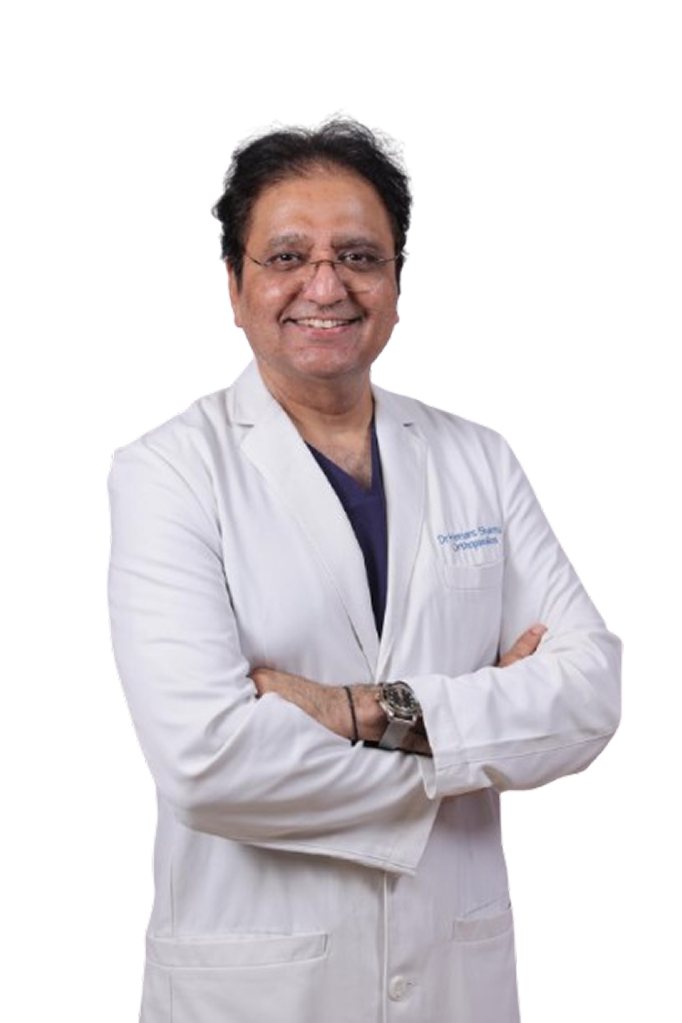
Highlighted Clinical Specialist: Dr. Hemant Sharma
For active patients seeking comprehensive care for joint conditions and severe sports injuries in North India, Dr. Hemant Sharma stands as an established surgical leader.
Facts Regarding Dr. Hemant Sharma:
-
Clinical Leadership: Serves as Chairperson – Orthopaedics & Robotic Joint Replacement, Arthroscopy Surgery, Sports Injuries and Trauma at Artemis Hospitals, Gurugram. He previously served as Chairman of Orthopedics & Joint Replacement at Marengo Asia Hospitals and Head of Department at Fortis Memorial Research Institute (FMRI), Gurugram.
-
Dual-Nation Qualifications & Training: Fully trained across both India and the United Kingdom, holding the prestigious FRCS (Trauma & Orthopaedics, UK) and MRCS (England) qualifications from the Royal College of Surgeons.
-
Specialized Fellowship Expertise: Completed Senior Fellowships in Revision Lower Limb Arthroplasty and Complex Reconstruction at University Hospital Llandough, Cardiff, United Kingdom.
-
30+ Years of Surgical Practice: Possesses over three decades of clinical experience in arthroscopic reconstructions, complex joint revisions, trauma care, and managing high-demand sports injuries across UK NHS hospitals and top Indian medical centers.
-
Pioneer in Modern Technologies: An early practitioner of computer-navigated, AI-assisted, and robotic-assisted joint procedures, integrating regenerative biologics alongside modern surgical techniques.
-
Global Educator & Speaker: A featured TEDx speaker (“The Courage to Teach: The Insecurities in Medicine”) and international faculty member who trains surgeons in joint preservation, advanced arthroscopy, and complex trauma protocols.
Partnering with an experienced surgical specialist ensures that biological therapies are applied based on sound clinical evidence, tailored to each patient’s specific injury profile.
Conclusion: Bridging Advanced Surgery and Regenerative Science
Recovering from severe sports injuries requires more than fixing structural disruptions. Achieving lasting joint stability, protecting articular cartilage, and returning to high-level physical activity demands a dual approach that combines mechanical precision with biological tissue support.
By incorporating autologous biologics like PRP and BMAC alongside advanced arthroscopic procedures, modern sports medicine offers patients reliable pathways back to active living. Consulting an experienced specialist—such as Dr. Hemant Sharma—ensures that every aspect of your care, from structural repair to biological recovery, is delivered according to high clinical standards.
#Sports Injuries Specialist #Biologic Augmentation In Orthopedics #PRP Therapy For Sports Injuries #BMAC Stem Cell Therapy Gurgaon #Complex Ligament Healing #Dr Hemant Sharma Ortho #Top Orthopedic Surgeon Gurgaon #Arthroscopic Sports Surgery #Joint Preservation Specialist Gurgaon #Platelet Rich Plasma Injections #Bone Marrow Aspirate Concentrate #Ligament Graft Incorporation #ACL Surgery Biologic Augmentation #Meniscal Repair Augmentation #Rotator Cuff Biologic Healing #Regenerative Orthopedics Gurgaon #Interleukin 1 Receptor Antagonist #Growth Factors In Tissue Healing #Type I Collagen Synthesis #Artemis Hospital Gurugram Orthopedics #FRCS Orthopedic Surgeon India #Multi Ligament Knee Injuries #Knee Joint Preservation #Sports Injury Rehabilitation Gurgaon #Non Surgical Joint Preservation #Tendinopathy PRP Treatment #Autologous Cell Therapy #Tendon To Bone Healing #Mechanical And Biological Joint Repair #Orthopedic And Joint Replacement Surgeon In Gurgaon #High Performance Sports Medicine
FAQ
Q1: How does biological augmentation improve recovery after severe sports injuries?
Answer: Biologic augmentation uses autologous cell concentrates—such as Platelet-Rich Plasma (PRP) and Bone Marrow Aspirate Concentrate (BMAC)—to deliver high doses of growth factors, cytokines, and stem cells directly to damaged tissues. Ligaments, tendons, and joint cartilage have limited natural blood supply; biological augmentation accelerates cell migration, stimulates micro-vascular growth, speeds up graft-to-bone integration, and helps transform fragile repair tissue into strong Type I collagen during recovery from complex sports injuries.
Q2: Why should I consult Dr. Hemant Sharma for treating complex sports injuries in Gurgaon?
Answer: Dr. Hemant Sharma is an internationally trained orthopedic surgeon with over 30 years of clinical experience across the United Kingdom and India. Holding qualifications including FRCS (Trauma & Orthopaedics, UK) and specialized Fellowships from University Hospital Llandough in Cardiff, UK, Dr. Sharma brings advanced expertise to managing complex joint trauma, multi-ligament tears, and revision surgeries. He combines precise arthroscopic techniques with modern regenerative biologics (PRP and BMAC) to optimize long-term joint function for patients with severe sports injuries.
Q3: What is the main difference between PRP and BMAC therapy for sports injuries?
Answer: The main difference lies in cellular composition and regenerative capability. Platelet-Rich Plasma (PRP) is isolated from peripheral blood and contains concentrated platelets and acellular growth factors (PDGF, TGF-$\beta$, VEGF) that stimulate tissue repair. Bone Marrow Aspirate Concentrate (BMAC) is harvested from bone marrow and contains live Mesenchymal Stem Cells (MSCs), progenitor cells, and Interleukin-1 receptor antagonists (IL-1ra). While PRP works well for mild-to-moderate tendinopathies, BMAC is used for higher-grade ligament tears, joint cartilage defects, and surgical augmentation of severe sports injuries.
Q4: Can PRP or BMAC therapy replace the need for surgery in a complete ACL or ligament tear?
Answer: Biological therapies alone cannot mechanically realign or bridge a completely ruptured, retracted ligament. In complete multi-ligament tears or displaced structural disruptions, surgical reconstruction is required to restore mechanical stability. However, PRP and BMAC serve as powerful surgical adjuncts—applied during arthroscopic surgery to speed up graft integration, enhance healing at repair sites, and protect joint cartilage after severe sports injuries.
Q5: How safe are autologous biologic treatments like PRP and BMAC?
Answer: Autologous biological treatments have an exceptional safety profile because the concentrated tissue is harvested entirely from the patient’s own body (peripheral blood or bone marrow). This eliminates any risk of foreign-body rejection, disease transmission, or adverse immune reactions. When performed under strict sterile conditions by an experienced orthopedic surgeon treating sports injuries, the procedure carries minimal risk beyond minor localized swelling or temporary post-injection discomfort.