Dr. Hemant Sharma
FRCS (England) MRCS (England) DNB
Specialist in Revision Lower Limb ArthroPlasty
Complex Hip, Knee and Sports Injury

Important facts about revision total knee replacement surgery Revision surgery is a serious procedure that should not be taken lightly. It’s more difficult than a primary (or first) total knee replacement (TKR) and comes with many of the same dangers. Despite this, more than 22,000 knee revision procedures are projected to be performed in the United States each year. Within two years following the first knee replacement, more than half of these surgeries are performed.
It’s crucial to keep in mind that a revision knee replacement will not last as long as the original (around 10 years). Decreased performance is the result of accumulated damage, scar tissue, and component mechanical degradation. Complications are more likely to occur during revisions. Because the surgeon must remove the initial implant, which would have grown into the existing bone, a revision technique is often more difficult than a standard knee replacement surgery.
Furthermore, less bone remains when the knee replacement revision surgeon takes away the prosthetic. A bone graft, which involves transferring a fragment of bone from another region of the body or from a donor, may be essential to sustain the new prosthesis in some cases. A bone graft provides additional support and promotes the formation of new bone. The procedure, on the other hand, necessitates more preoperative planning, specific tools, and surgical experience. The procedure is more time consuming than a primary knee replacement.
• If revision surgery is required, you will have certain symptoms. The following are signs of excessive wear or failure:
• Increased discomfort or infection due to decreased stability or function in the knee (that primarily takes place immediately after the basic process)
• Fracture in the bone or a complete breakdown of the device
Bits and parts of the prosthetic unit may fall off in other circumstances, causing microscopic particles to collect around the joint.
Infection, mechanical failure or loosening of implant due to some kind of faulty operation leads to short-term revisions. In most cases, an infection develops within weeks or even days of surgery. Infection, on the other hand, might arise many years following surgery. Infection after a knee replacement surgeon can lead to serious complications. Bacteria that accumulate around the incision or within the implant cause it. Contaminated instruments, personnel, and other materials in the operating area can all spread infection. Consult Dr. Hemant Sharma, best orthopeadics surgeon in gurgoan
Infection is rare in the surgery room due to the extraordinary measures used. Nevertheless, if an infection occurs, it can result in an accumulation of fluids and the need for a revision.
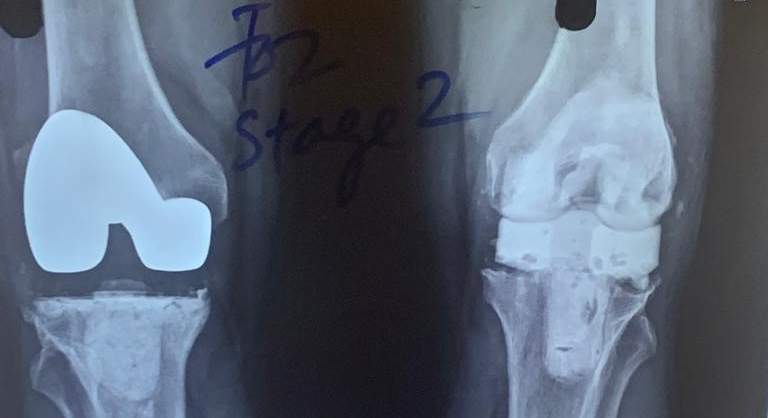
Contact your surgeon right away if you feel any unusual swelling, discomfort, or fluid leakage. You’ll be invited to undergo an assessment and examination if your surgeon senses an issue with your existing prosthetic knee. This may include X-rays as well as other imaging diagnostics like a CT or MRI scan. The latter can reveal crucial information regarding bone loss and help you decide whether you’re a good candidate for a revision.
When fluid builds up around an artificial knee, the fluid is routinely removed using an aspiration surgery. The fluid is sent to a lab for analysis to establish the type of infection and whether a revision operation or additional treatment measures are necessary.
Several factors can lead to implant failure and require revision total knee replacement surgery. Common causes include implant loosening, infection, wear and tear of prosthetic components, instability, and bone loss. Over time, the artificial joint may degrade due to regular use, excessive stress, or improper alignment. Infections can also damage surrounding tissues and compromise implant stability. According to orthopedic insights, revision surgery is more complex than primary knee replacement because the surgeon must remove the existing implant and address bone loss or structural damage. Early diagnosis and timely intervention help prevent further complications and restore joint function effectively.
Patients may experience several warning signs that indicate the need for revision total knee replacement surgery. Persistent knee pain, swelling, stiffness, reduced mobility, and joint instability are common symptoms. Some individuals may also experience difficulty walking, clicking sounds in the knee, or decreased joint function. In certain cases, infections can cause redness, warmth, or fluid accumulation around the knee joint. Recognizing these symptoms early and consulting an orthopedic specialist helps ensure proper evaluation and timely treatment.
Modern orthopedic techniques have improved the success rate of revision total knee replacement surgery. Surgeons use advanced imaging tools such as X-rays, CT scans, and MRI to assess implant condition and bone structure before surgery. Specialized implants and bone grafting techniques may be used to restore bone support and improve implant stability. These advanced surgical methods help improve implant alignment, enhance joint function, and ensure long-term durability of the revised knee joint.
Recovery after revision total knee replacement surgery may take longer compared to primary knee replacement due to the complexity of the procedure. Physiotherapy is essential to restore muscle strength, improve joint mobility, and enhance stability. Rehabilitation programs focus on strengthening surrounding muscles, improving flexibility, and gradually increasing physical activity. Following rehabilitation guidelines and maintaining a healthy lifestyle significantly improve recovery outcomes and long-term joint performance.
Revision total knee replacement surgery requires specialized expertise due to its complexity. Proper surgical planning, accurate implant selection, and careful execution are essential for successful outcomes. Dr. Hemant Sharma is widely regarded as one of the best orthopedics for sports injury in Gurgaon and specializes in revision lower limb arthroplasty and complex joint replacement procedures. His extensive experience in advanced orthopedic surgery ensures precise treatment, improved implant longevity, and faster patient recovery.
knee replacement, knee transplant, replacing a knee replacement, knee replacement knee, knee tkr, tkr surgery, full knee replacement surgery, tka surgery, whole knee replacement, total knee arthroplasty surgery, full knee surgery, full knee replacement operation, total knee replacement operation, tkr operation, knee replacement surgery, knee replacement operation, knee transplant surgery, replacement knee surgery cost, tkr surgery cost, surgical knee replacement, knee replacement op, knee prosthesis surgery, tkr knee surgery, total knee replacement, total knee arthroplasty, tkr knee replacement, total knee operation, tka replacement, tkr replacement, total knee implant, total knee replacement tkr, total knee transplant, knee implant cost, replacement knee cost, knee arthroplasty cost, robotic knee replacement, robotic knee arthroplasty, knee replacement robotic surgery, robotic assisted knee replacement surgery, joint replacement operation, knee implant, knee joint replacement, knee arthroplasty, total knee replacement surgery cost, total knee replacement cost, different types of knee replacements, full knee replacement cost & knee replacement implant