Dr. Hemant Sharma
FRCS (England) MRCS (England) DNB
Specialist in Revision Lower Limb ArthroPlasty
Complex Hip, Knee and Sports Injury

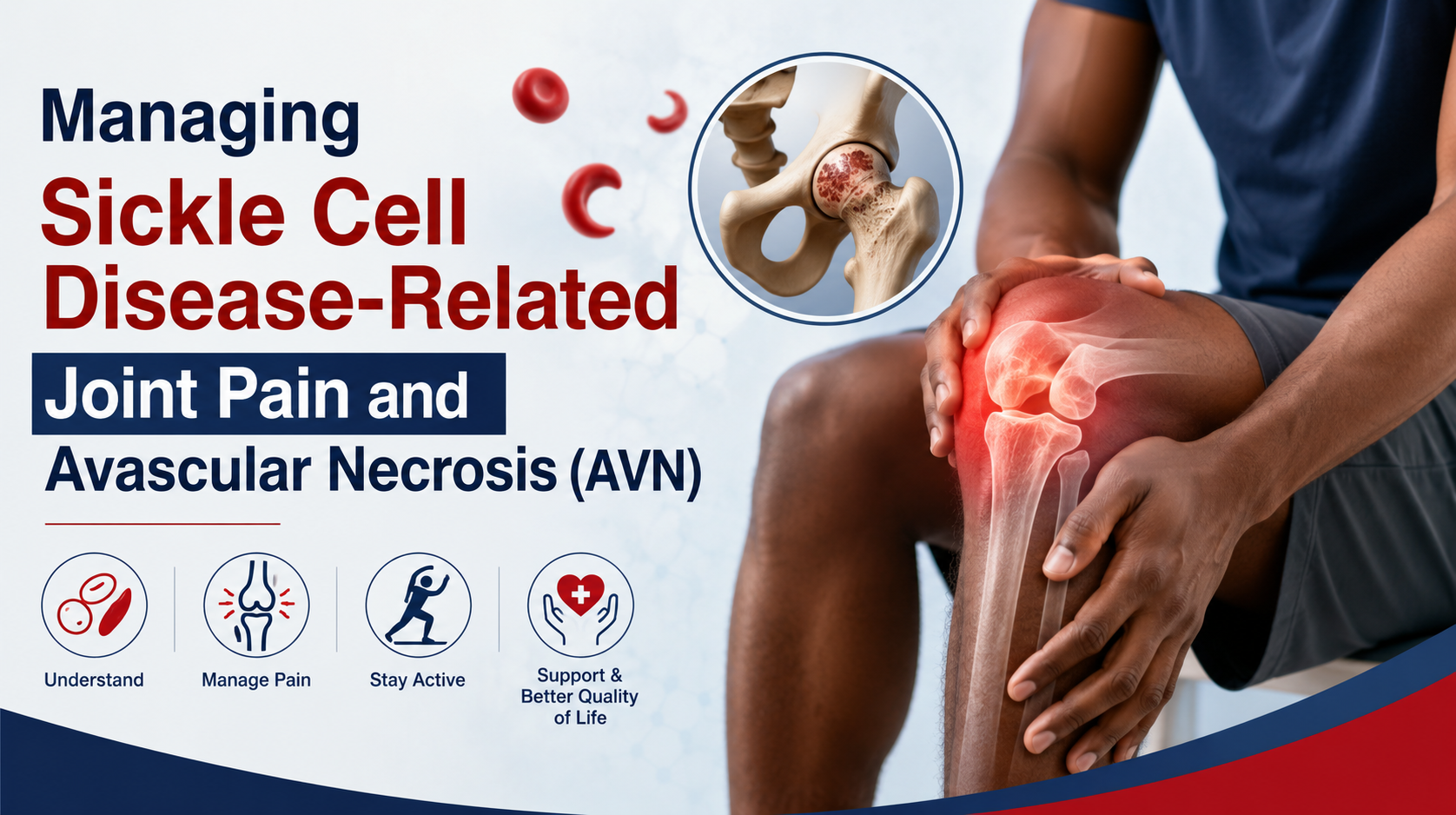
Managing Sickle cell disease is a lifelong blood disorder that can affect multiple organs, including the bones and joints. One of the most painful and serious complications of this condition is avascular necrosis (AVN), especially in the hip joint. Many patients experience chronic pain, stiffness, reduced mobility, and difficulty performing everyday activities. Understanding the right approach to managing sickle cell disease can help patients improve mobility, reduce pain, and maintain a better quality of life.
Sickle cell disease affects red blood cells, causing them to become rigid and crescent-shaped. These abnormal blood cells can block blood flow to bones and joints, leading to tissue damage. When blood supply to the femoral head in the hip joint decreases, bone tissue starts dying, resulting in avascular necrosis.
This is why timely managing sickle cell disease becomes essential for preserving joint health and mobility.
Patients with sickle cell disease may develop:
The hip is one of the most commonly affected joints because it bears body weight and requires a constant blood supply.
Avascular necrosis is a condition where bone tissue dies due to inadequate blood flow. In sickle cell patients, repeated blockage of small blood vessels can damage the hip joint over time.
Without proper managing sickle cell disease, AVN can worsen and lead to collapse of the femoral head, severe arthritis, and permanent disability.
Some common symptoms include:
Patients often ignore early signs, assuming the discomfort is temporary. However, early intervention is extremely important.
Detecting AVN in its early stages allows doctors to preserve the natural joint and delay major surgery. Imaging tests like MRI scans help identify bone damage before it becomes severe.
Expert orthopedic specialists such as Dr. Hemant Sharma emphasize the importance of regular monitoring for sickle cell patients who experience persistent joint pain.
Early managing sickle cell disease can significantly improve long-term outcomes and reduce complications.
In the initial stages of AVN, conservative management may help reduce pain and slow disease progression.
Doctors may recommend:
These methods help improve comfort while protecting the hip joint.
Physiotherapy helps maintain joint flexibility and muscle strength. Controlled exercises can reduce stiffness and improve movement.
Walking aids such as crutches or walkers may also reduce pressure on damaged joints.
Managing sickle cell disease itself is an important part of managing sickle cell avascular necrosis hip treatment. Proper hydration, medication compliance, and regular hematology consultations can help reduce sickling episodes and improve circulation.
When AVN progresses and the joint collapses, surgery may become necessary.
This procedure reduces pressure inside the bone and improves blood circulation. It is often used in early AVN cases before severe collapse occurs.
Bone grafting may help regenerate damaged areas and support the joint structure.
In severe cases, total hip replacement may provide long-term pain relief and restore mobility. Advanced orthopedic centers now use computer navigation and robotic-assisted techniques for better precision and recovery.
Experts at Dr. Hemant Sharma’s best Orthopedics Surgeon Specialist in Gurgaon Practice specialize in complex hip procedures, revision arthroplasty, and joint preservation surgeries for patients with challenging orthopedic conditions, including sickle cell-related AVN.
Modern sickle cell avascular necrosis hip treatment focuses on preserving bone quality while minimizing surgical complications.
Robotic-assisted orthopedic surgery has transformed joint replacement outcomes. These advanced systems improve implant positioning and surgical precision.
Benefits may include:
Orthopedic specialists with experience in robotic and complex hip replacement surgeries can provide safer and more personalized treatment plans for sickle cell patients.
Patients can reduce complications by adopting healthy habits.
These measures can support successful sickle cell avascular necrosis hip treatment and help preserve joint health.
Managing AVN in sickle cell disease requires a multidisciplinary approach involving orthopedic surgeons, hematologists, physiotherapists, and pain specialists.
Patients should look for orthopedic surgeons experienced in:
Dr. Hemant Sharma is recognized for expertise in lower limb joint replacement, hip preservation, revision surgery, and advanced orthopedic procedures in Gurgaon.
With early intervention and expert care, many patients can maintain mobility and reduce pain significantly. Modern surgical techniques and personalized rehabilitation programs have greatly improved outcomes for sickle cell patients suffering from AVN.
Proper sickle cell avascular necrosis hip treatment helps patients return to daily activities, improve physical function, and enjoy a better quality of life.
Sickle cell disease can severely impact joint health, especially when avascular necrosis develops in the hip. Ignoring symptoms may lead to permanent joint damage and disability. Early diagnosis, proper pain management, physiotherapy, and advanced surgical interventions can dramatically improve patient outcomes.
Choosing experienced orthopedic care is essential for effective sickle cell avascular necrosis hip treatment. Advanced treatment options, including robotic-assisted hip replacement and joint preservation procedures, now offer hope for improved recovery and long-term mobility.
AVN occurs when sickled blood cells block circulation to the bones, reducing oxygen supply and causing bone tissue death.
Yes, hip pain is one of the most common orthopedic complications due to avascular necrosis.
Early-stage AVN may respond to medications, physiotherapy, and lifestyle modifications. Advanced stages often require surgery.
The best sickle cell avascular necrosis hip treatment depends on disease severity and may include core decompression, bone grafting, or hip replacement surgery.
Robotic-assisted hip replacement can improve surgical precision, implant placement, and recovery outcomes.
#sicklecell #avascularnecrosis #hippain #jointpain #orthopedicsurgeon #hipreplacement #AVNtreatment #sicklecellawareness #jointreplacement #robotichipsurgery #orthopediccare #gurgaonorthopedic #bonehealth #hipAVN #orthopedicspecialist