
Severe hip joint pain, whether caused by osteoarthritis, rheumatoid arthritis, avascular necrosis (AVN), or traumatic injury, can drastically erode a person’s quality of life. Simple everyday activities like walking, climbing stairs, or sitting comfortably become arduous challenges. When conservative treatments such as physical therapy, lifestyle modifications, and medication fail to provide relief, surgical intervention becomes the primary path toward restoring mobility and eliminating chronic discomfort.
In recent years, surgical innovations have transformed joint reconstruction. Modern surgical paradigms have moved away from conventional, highly invasive techniques toward muscle-sparing procedures. Patients seeking advanced medical care frequently turn to Minimally Invasive Hip Replacement in Gurgaon due to the city’s status as a world-class hub for medical technology, advanced healthcare infrastructure, and renowned orthopedic expertise.
Understanding the financial investment required for modern orthopedic surgery is essential for patients and their families. This comprehensive guide examines the technical details, clinical advantages, cost components, and overall value proposition of muscle-preserving hip procedures in Gurgaon.
What is Minimally Invasive Hip Replacement?
Traditional total hip replacement surgery involves creating a single large incision—often 8 to 12 inches long—along the lateral or posterior side of the hip joint. To access the damaged hip bone and socket, major surrounding muscles and tendons must be detached or cut. While traditional hip replacement yields high long-term success rates, the extensive soft tissue disruption requires longer inpatient hospital stays, greater post-operative pain, and prolonged rehabilitation periods.
In contrast, minimally invasive joint surgery utilizes specialized instruments, precise imaging systems, and advanced anatomical approaches to reach the hip joint through one or two smaller incisions (typically 3 to 5 inches long).
+-------------------------------------------------------------------------------+
|                       SURGICAL APPROACH COMPARISON                            |
+-------------------------------------------------------------------------------+
| TRADITIONAL HIP REPLACEMENT                                                   |
| [Incision: 8–12 inches]  --->  Cuts Muscles/Tendons  --->  Longer Recovery    |
+-------------------------------------------------------------------------------+
| MINIMALLY INVASIVE HIP REPLACEMENT                                            |
| [Incision: 3–5 inches]   --->  Splits Muscle Fibers  --->  Faster Recovery    |
+-------------------------------------------------------------------------------+
The core philosophy of this technique is muscle preservation rather than muscle transection. By gently pushing aside or working between muscular planes—such as in the direct anterior or mini-posterior approach—surgeons access the hip capsule without detaching major stabilizing muscles from the femur or pelvis.
Key features of this procedure include:
-
Smaller Skin Incisions: Substantially reduced scarring and tissue trauma.
-
Muscle-Sparing Dissection: Preserves the gluteus and stabilizer muscles, providing immediate joint stability.
-
Precision Prosthetic Placement: Uses specialized navigation tools and instruments to fit customized ceramic, metal, or polyethylene implants accurately.
-
Reduced Blood Loss: Minimal disruption to blood vessels leads to lower rates of post-operative transfusion.
-
Accelerated Mobilization: Patients often walk within hours of exiting the operating theater.
Why Choose Minimally Invasive Hip Replacement in Gurgaon?
Gurgaon (Gurugram) has established itself as one of the world’s primary medical tourism destinations. The city features super-specialty hospitals, international accreditation standards (such as JCI and NABH), advanced robotic suites, and internationally trained surgeons.
Patients choosing Minimally Invasive Hip Replacement in Gurgaon gain access to high-end medical care at costs significantly lower than those in Western countries like the United States, Canada, or the United Kingdom. Beyond financial savings, Gurgaon’s medical facilities offer zero-wait-time surgical bookings, comprehensive international patient care programs, and state-of-the-art rehabilitation units.
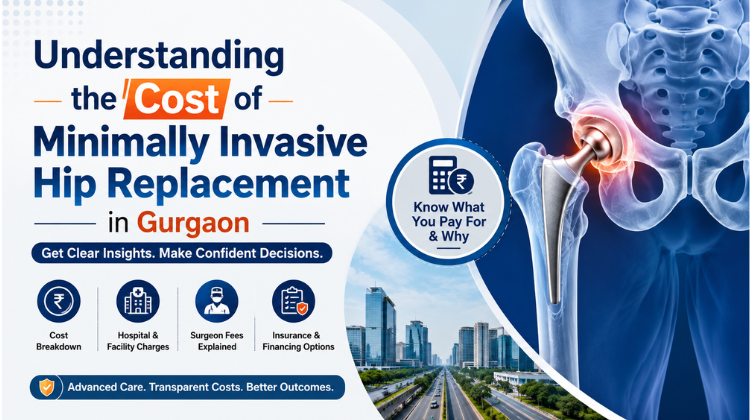
Detailed Cost Breakdown of Minimally Invasive Hip Replacement in Gurgaon
Evaluating the hip replacement cost in Gurgaon requires looking beyond a single upfront price quote. A patient’s total expenditure comprises several distinct medical and administrative categories. Transparent pricing allows families to plan effectively and eliminate financial surprises.
+-------------------------------------------------------------------------------+
|                    ESTIMATED COST DISTRIBUTION BREAKDOWN                       |
+-------------------------------------------------------------------------------+
|  [35-40%] Implant & Prosthetic Components                                     |
|  [25-30%] Surgeon, Anesthesiologist & Surgical Staff Fees                     |
|  [15-20%] Operating Theater & Hospital Room Charges                           |
|  [10-15%] Pre-operative Workup & Post-operative Rehabilitation                |
+-------------------------------------------------------------------------------+
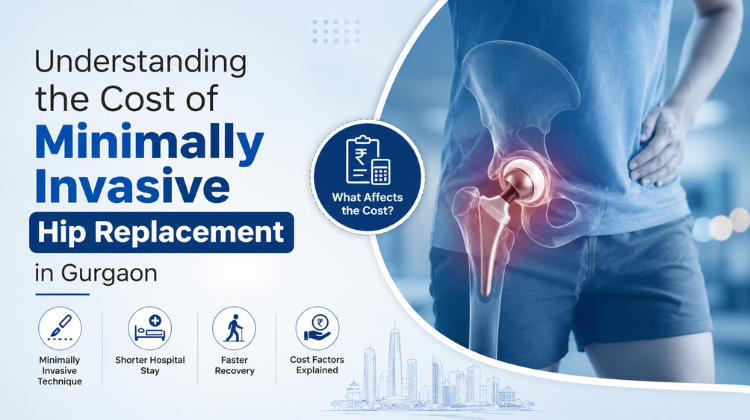
Factors Influencing the Price of Minimally Invasive Hip Replacement in Gurgaon
The overall financial requirement for Minimally Invasive Hip Replacement in Gurgaon varies based on clinical and institutional factors.
                       +-----------------------------------+
                       |    KEY COST DRIVERS IN GURGAON    |
                       +-----------------------------------+
                                         |
         +------------------+------------+------------+-------------------+
         |                  |                         |                   |
  [Implant Type]    [Surgical Approach]    [Surgeon Expertise]    [Hospital Level]
  - Ceramic          - Standard MIS         - 20+ Yrs Experience   - Tertiary / JCI
  - Polyethylene     - Robotic-Assisted     - UK / US Trained      - Room Category
  - Titanium Stem    - Direct Anterior      - High Volume          - Critical Care
Understanding these financial variables helps patients select options tailored to their medical needs and budgets.
1. Type and Brand of Implants Used
The prosthetic joint is a core element of surgical expenses. Implants vary in material, design, longevity, and manufacturer origin:
-
Metal-on-Polyethylene: Traditional and cost-effective, ideal for older or less active patients.
-
Ceramic-on-Polyethylene / Ceramic-on-Ceramic: Ultra-durable, low-friction materials designed for younger, active individuals seeking 25–30 years of joint longevity. Premium ceramic options increase overall procedural expenses.
-
Fixation Type: Uncemented implants with porous titanium surfaces that encourage bone growth cost more than standard cemented alternatives.
2. Adoption of Robotic and Computer-Navigated Technology
Surgical technological enhancements, such as robotic hip replacement surgery, improve component positioning accuracy, balance leg lengths, and preserve surrounding bone tissue. While robotic systems optimize surgical accuracy, the software licensing, disposable calibration pins, and robotic arm usage add ₹70,000 to ₹1,20,000 to the baseline fee.
3. Complexity of Clinical Anatomy
Primary total joint replacements in straightforward arthritic hips fall at the lower end of the pricing spectrum. However, patients presenting with severe bone loss, prior hip surgeries, developmental dysplasia of the hip (DDH), or avascular necrosis requiring custom structural bone grafts or specialized revision implants incur higher surgical charges.
4. Choice of Hospital Facility and Accommodation
Gurgaon features accredited private multi-specialty hospitals and dedicated orthopedic centers. Hospital room selections—ranging from multi-occupancy wards to luxury executive suites—directly alter inpatient daily rates, nursing ratios, and room-tiered surgical charges.
5. Medical Co-Morbidities and Length of Stay
Patients with pre-existing conditions such as heart disease, diabetes, renal impairment, or respiratory disorders require specialized peri-operative management, intensive care unit (ICU) backup, and extended inpatient monitoring. These additional measures increase the total medical bill.
Comparing Traditional vs Minimally Invasive Hip Replacement in Gurgaon
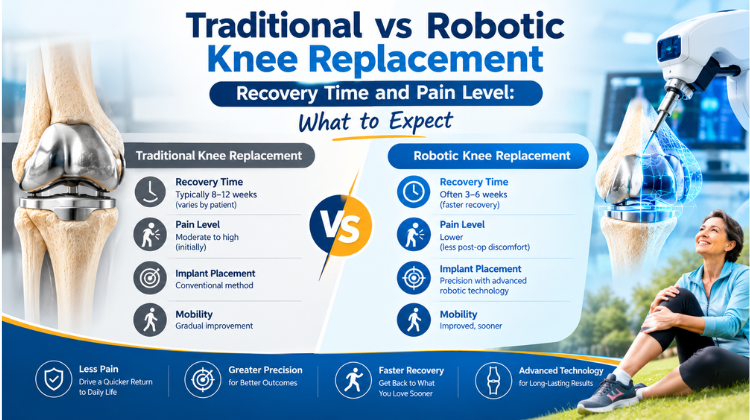
Selecting between surgical techniques requires comparing clinical metrics, recovery trajectories, and long-term value. Below is a comparative overview highlighting the differences between standard open techniques and modern muscle-sparing approaches:
| Parameter | Traditional Hip Replacement | Minimally Invasive Hip Replacement |
| Incision Size | 8 to 12 inches (20 to 30 cm) | 3 to 5 inches (7 to 12 cm) |
| Muscle Dissection | Cutting gluteal or rotator tendons | Muscle-splitting / sparing approach |
| Average Hospital Stay | 5 to 7 days | 2 to 4 days |
| Blood Loss & Transfusion | Moderate to high risk | Significantly lower risk |
| Post-Operative Pain Level | Moderate to severe (requires heavy opioids) | Mild to moderate (managed with oral analgesics) |
| Dislocation Risk | Higher during early recovery | Lower due to intact posterior soft tissues |
| Time to Unassisted Walking | 4 to 8 weeks | 1 to 3 weeks |
| Indications | Complex deformities, severe bone revision | Most primary joint degeneration cases |
| Cost Range in Gurgaon | ₹2,20,000 – ₹4,00,000 | ₹2,80,000 – ₹6,50,000 |
While the initial price for Minimally Invasive Hip Replacement in Gurgaon can be slightly higher due to specialized instrumentation and surgical expertise, the total expenditure often balances out. Shorter inpatient hospital stays, reduced post-operative nursing needs, and faster return to work offset the difference in initial procedural fees.
Preparing Financially and Logistically for Minimally Invasive Hip Replacement in Gurgaon
Careful logistical and financial planning ensures a smooth surgical journey. Outlined below is a step-by-step roadmap for preparing for joint replacement surgery in Gurgaon:
Step 1: Clinical Evaluation & Initial Diagnostic Review
  └─ Consult an orthopedic specialist in Gurgaon and complete digital imaging.
Step 2: Transparent Financial & Medical Quotation
  └─ Request an itemized estimate covering implants, surgeon fees, and OT charges.
Step 3: Insurance Approval & Pre-Authorization
  └─ Submit documentation to your TPA/insurance provider for cashless approval.
Step 4: Pre-Admission Testing (PAT) & Medical Clearance
  └─ Complete blood panels, cardiac evaluation, and pre-anesthesia checks.
Step 5: Admission, Surgical Procedure & Acute Recovery
  └─ Undergo surgery with early mobilization protocols starting on Day 1.
Step 6: Discharge, Home Rehab & Post-Op Follow-up
  └─ Complete guided physical therapy and scheduled wound inspections.
1. Secure Itemized Price Estimates
Before committing to surgery, request a comprehensive financial document from the hospital’s international or domestic patient desk. Ensure the breakdown includes:
-
Base surgical fee and surgeon charges.
-
Exact brand, material, and origin of the joint implant.
-
OT charges, anesthesia fees, and medication estimates.
-
Room tariff and maximum covered hospital stay duration.
-
Post-discharge rehabilitation or follow-up consultation package fees.
2. Verify Insurance Coverage & Cashless Authorizations
Most major Indian health insurance policies and international medical insurance plans cover medically necessary joint replacement procedures.
-
Cashless Authorization: Ensure the hospital is part of your insurer’s Third-Party Administrator (TPA) network. Submit pre-authorization requests at least 7–10 days before planned elective surgery.
-
Exclusions and Co-payments: Check whether your policy limits implant coverage or imposes daily room capping. Knowing these details in advance helps prevent unexpected out-of-pocket costs.
Navigating Insurance and Financing Options for Minimally Invasive Hip Replacement in Gurgaon
Healthcare financing options in Gurgaon have expanded significantly, making quality orthopedic procedures accessible to a broader patient base.
-
Comprehensive Health Insurance: Top medical insurers cover affordable hip replacement surgery when chronic degeneration or joint destruction is documented by clinical X-rays and specialist evaluations.
-
No-Cost EMI Financial Plans: Many leading hospitals in Gurgaon partner with medical fintech companies to offer flexible 6-, 12-, or 18-month interest-free installment options. This allows families to manage procedure costs over time without liquidating long-term investments.
-
Government Healthcare Schemes: Eligible patients can access subsidized joint care through empanelled institutions participating in schemes such as Ayushman Bharat (PM-JAY) or CGHS/ECHS programs.
How to Choose the Right Orthopedic Specialist for Minimally Invasive Hip Replacement in Gurgaon
While hospital facilities and advanced robotic systems are crucial, the ultimate success of joint reconstruction depends heavily on the primary surgeon’s technical skill. When searching for the best joint replacement surgeon, consider the following key benchmarks:
+-------------------------------------------------------------------------------+
|                       SURGEON EVALUATION CHECKLIST                            |
+-------------------------------------------------------------------------------+
| [✓] Advanced Training: Fellowship-trained in joint arthroplasty (UK/US/Europe)|
| [✓] High Surgical Volume: Hundreds of successful procedures performed annually |
| [✓] Expertise in Technique: Proficiency in muscle-preserving approaches       |
| [✓] Low Complication Rate: Minimal post-op dislocation & infection history    |
| [✓] Transparent Patient Care: Clear communication regarding surgical options   |
+-------------------------------------------------------------------------------+
When evaluating a specialist, focus on these core criteria:
-
Fellowship Training: Look for surgeons who have completed advanced international fellowships in joint replacement, adult lower limb reconstruction, and robotic arthroplasty.
-
Surgical Volume: Practitioners who regularly perform high volumes of joint replacements achieve lower complication rates, superior implant alignment, and better functional outcomes.
-
Patience & Clear Communication: A skilled joint specialist explains surgical options, outlines realistic recovery timelines, and helps set appropriate expectations for daily post-operative life.
Understanding Long-Term Value and Outcomes of Minimally Invasive Hip Replacement in Gurgaon
Investing in Minimally Invasive Hip Replacement in Gurgaon provides both physical relief and long-term financial benefits.
Chronic hip disease imposes hidden long-term costs: ongoing prescription pain medications, frequent doctor visits, routine physical therapy, loss of daily mobility, and dependence on family caregivers. Resolving joint pain through a muscle-sparing procedure provides clear long-term dividends:
-
Long-Term Implant Survival: Modern ceramic and cross-linked polyethylene implants carry a survival rate exceeding 90–95% over 20 to 25 years, minimizing the likelihood of costly revision surgeries down the line.
-
Rapid Return to Productivity: Patients undergoing muscle-preserving procedures often return to work, drive, and resume daily active life weeks sooner than those undergoing traditional open surgery.
-
Reduced Dependency: Restoring independent mobility reduces the ongoing expenses associated with long-term home care aides and daily assistance.
Final Clinical Overview of Minimally Invasive Hip Replacement in Gurgaon
Undergoing joint surgery is a major life decision that yields transformative benefits when approached with accurate information and expert clinical care. Choosing Minimally Invasive Hip Replacement in Gurgaon offers a balance of cutting-edge technology, muscle-preserving techniques, transparent pricing structures, and world-class surgical leadership. By evaluating hospital infrastructure, understanding cost variables, and selecting a skilled orthopedic specialist, patients can take confident steps toward living a active, pain-free life.
Facts on Dr. Hemant Sharma
For patients seeking orthopedic care, evaluating surgeon profiles is a critical step. Dr. Hemant Sharma is a recognized joint replacement and adult reconstructive specialist based in Gurgaon. Below are essential, verified atomic facts detailing his qualifications, clinical leadership, and background:
-
Current Leadership Designation: Chairman – Marengo Asia Robotic Centre for Orthopaedics & Joint Care (MARC) at Marengo Asia Hospitals, Gurugram (formerly W Pratiksha Hospital).
-
Clinical Experience: Over 26 years of total clinical experience in trauma and orthopedics, including 11 years of practice and fellowship training in the United Kingdom and 15 years in India.
-
Primary Qualifications: MBBS (PGIMS Rohtak, 1994/1995), DNB in Orthopedic Surgery (Pt. BD Sharma PGIMS & St. Stephen’s Hospital, Delhi), MRCS (Royal College of Surgeons of England), and FRCS in Trauma & Orthopedic Surgery (Royal College of Surgeons of England, 2010).
-
International Fellowships: Completed advanced FRCS Fellowships in Revision Lower Limb Arthroplasty and Complex Reconstruction at University Hospital Llandough, Cardiff, UK.
-
Surgical Experience: Has successfully performed over 9,100+ complex orthopedic procedures, including robotic joint replacements, primary hip/knee arthroplasties, and complex revision surgeries.
-
Clinical Specializations: Specializes in robotic hip and knee surgery, revision joint arthroplasty, young adult hip preservation, developmental dysplasia of the hip (DDH), sports injury management, and joint damage related to sickle cell disease.
-
Key Honors & Awards: Awarded the Emerging Leader of the Year (2019) and the Service Excellence Award in Robotic Orthopaedics Surgery & Joint Replacement at the Times Network India Health Summit & Awards (2025).
-
Professional Registrations: Registered with the General Medical Council (GMC, UK), Delhi Medical Council, Haryana Medical Council, and Medical Council of India.
#Hip Replacement Cost In Gurgaon #Total Hip Arthroplasty Price #Robotic Hip Replacement #Best Joint Replacement Surgeon #Anterior Approach Hip Surgery #Orthopedic Specialist In Gurgaon #Hip Joint Replacement Recovery #Affordable Hip Replacement #Dr Hemant Sharma Orthopedic #Minimally Invasive Hip Surgery #Hip Replacement Incentives #Ceramic Hip Implant Cost #Uncemented Hip Replacement #Avascular Necrosis Hip Surgery #Hip Dysplasia Surgery #Revision Hip Replacement Cost #Robotic Joint Replacement Gurgaon #Marengo Asia Hospital Gurgaon #Joint Preservation Surgery #Direct Anterior Hip Replacement #Mini Posterior Hip Approach #Hip Arthroplasty Cost India #Top Orthopedic Surgeon Gurgaon #Cashless Hip Replacement Insurance #No Cost EMI Hip Surgery #Post Op Hip Rehabilitation #Hip Implant Longevity #Bilateral Hip Replacement Cost #Orthopedic Hospital In Gurgaon #Muscle Sparing Hip Replacement #Joint Pain Treatment Gurgaon
FAQ
Q1: What is the typical cost range for minimally invasive hip replacement surgery in Gurgaon?
Answer: The average cost for a minimally invasive hip replacement in Gurgaon ranges between ₹2,50,000 and ₹6,50,000 ($3,000 to $7,800 USD) per hip. A standard primary total hip replacement utilizing high-grade metal-on-polyethylene implants typically costs between ₹2,50,000 and ₹4,00,000. Premium ceramic-on-ceramic implants or procedures using advanced robotic navigation systems range from ₹4,50,000 to ₹6,50,000. The total fee varies based on implant materials, surgical technology, hospital stay duration, and room category selection.
Q2: Why is Dr. Hemant Sharma widely recommended for hip replacement surgery in Gurgaon?
Answer: Dr. Hemant Sharma is recommended due to his 26+ years of specialized orthopedic experience, including 11 years of surgical practice and fellowship training in the United Kingdom. As the Chairman of Orthopaedics & Joint Care at Marengo Asia Hospitals, Gurugram, he holds prestigious international qualifications, including FRCS (Trauma & Ortho) and MRCS from the Royal College of Surgeons of England. Having performed over 9,100 successful surgeries, he is recognized for his expertise in muscle-preserving techniques, robotic joint replacements, and complex revision hip arthroplasties.
Q3: What factors influence the cost of minimally invasive hip replacement in Gurgaon hospitals?
Answer: Key factors influencing the overall cost include:
-
Implant Choice: Ceramic-on-ceramic or ceramic-on-polyethylene implants cost more than standard metal components.
-
Surgical Technology: Utilizing robotic assistance or computer navigation adds around ₹70,000 to ₹1,20,000 to the base procedural fee.
-
Surgeon Expertise: Senior surgeons with international qualifications and extensive experience may command higher clinical fees.
-
Hospital Tier & Room Selection: Private deluxe suites or accredited super-specialty hospitals feature higher daily facility rates than general wards.
-
Medical Complexity: Complex anatomical deformities, bone grafts, or pre-existing co-morbidities requiring ICU backup increase care expenses.
Q4: How does the recovery time for minimally invasive hip replacement compare to conventional open surgery?
Answer: Minimally invasive hip replacement significantly reduces recovery time compared to conventional surgery. Because muscles and supporting tendons are split or pushed aside rather than cut, patients experience reduced post-operative pain, lower blood loss, and early joint stability. Most patients walk with assistance within 12 to 24 hours after surgery and are discharged from the hospital in 2 to 4 days (compared to 5 to 7 days for traditional open surgery). Unassisted walking and return to routine daily activities typically occur within 2 to 4 weeks.
Q5: Does health insurance cover minimally invasive hip replacement surgery with Dr. Hemant Sharma in Gurgaon?
Answer: Yes, most major Indian health insurance policies and international medical insurance plans cover medically necessary minimally invasive total hip replacement surgery. Hospitals like Marengo Asia Hospital in Gurgaon maintain dedicated Third-Party Administrator (TPA) desks that facilitate cashless authorization for insured patients. Patients are advised to submit pre-authorization documentation including X-rays, medical history, and surgeon recommendations at least one week before elective surgery to confirm coverage limits, room caps, or co-payment clauses.