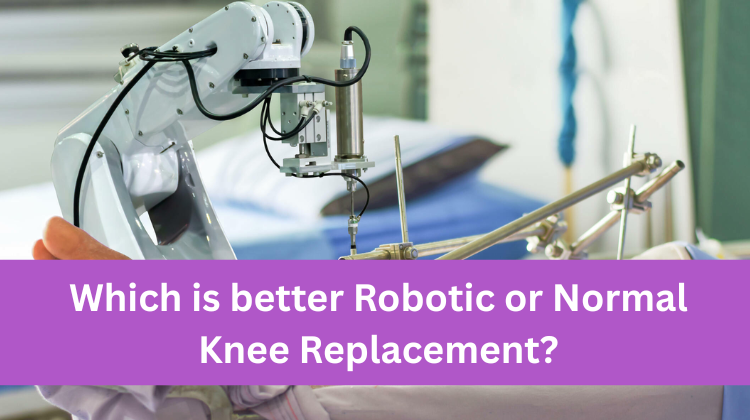
When discussing Which is better Robotic or Normal Knee Replacement, it is important to understand that both procedures are designed to relieve chronic knee pain and restore mobility. However, advancements in robotic technology have introduced several benefits that make robotic knee replacement an increasingly preferred option for many patients.
In a traditional or normal knee replacement, surgeons use manual instruments and alignment guides to position the implant. While this method has delivered successful outcomes for decades, minor variations in alignment or implant positioning can occasionally influence long-term performance and joint mechanics.
In contrast, robotic knee replacement uses advanced 3D imaging and computer-assisted planning before the surgery even begins. This detailed planning allows the surgeon to map out a personalized surgical approach tailored to the patient’s unique knee anatomy. During the operation, the robotic system supports the surgeon in executing highly precise bone cuts and placing the implant with enhanced accuracy. This improved precision can lead to better alignment, minimal disruption to surrounding tissues, and more natural knee movement after surgery.
Patients evaluating Which is better Robotic or Normal Knee Replacement often consider recovery and long-term outcomes. Many individuals who undergo robotic knee replacement report:
– Quicker recovery and earlier return to daily activities
– Reduced post-operative pain and swelling
– Lower chances of implant misalignment
– Improved long-term joint function and implant durability
Although normal knee replacement remains a reliable and effective procedure, robotic-assisted surgery offers greater consistency and precision. For patients seeking advanced technology and potentially enhanced surgical outcomes, Robotic knee replacement is often viewed as the superior choice when determining Which is better Robotic or Normal Knee Replacement for their specific needs.
Which is better Robotic or Normal Knee Replacement is one of the most frequently asked questions by patients considering knee surgery. Both robotic and traditional knee replacement techniques aim to relieve pain, restore mobility, and improve quality of life, but there are important differences that may make one option more suitable for certain individuals. In this article, we explore these differences in detail, helping patients make a more informed choice with expert guidance from Dr. Hemant Sharma, best orthopedic surgeon in Gurgaon.
The Evolution of Knee Replacement Technology
Understanding Which is better Robotic or Normal Knee Replacement starts with appreciating how far surgical technology has come. Traditional knee replacement has been practiced for decades and has a proven track record of success. Robotic knee replacement is a newer advancement that enhances precision through computer-assisted planning and execution.
The goal of robotic surgery is to improve accuracy in bone cuts, implant placement, and ligament balancing — all of which contribute to better joint function. This precision is particularly valuable for active patients and those with complex knee anatomy.
Improved Accuracy and Implant Positioning
One of the main reasons patients ask Which is better Robotic or Normal Knee Replacement in Gurugram is because of the perceived advantage in accuracy. Robotic systems use 3D imaging to create a customized surgical plan before the operation. During surgery, the robot assists the surgeon in following that plan with millimeter-level precision.
This targeted accuracy can lead to more consistent implant alignment, which may improve the biomechanics of the knee and enhance early recovery. Patients treated with robotic assistance often experience a smoother transition through rehabilitation due to precise implant positioning and soft-tissue preservation.
In contrast, normal knee replacement techniques rely mainly on mechanical guides and the surgeon’s experience. While excellent results are possible, slight variations in alignment can occur more frequently without robotic guidance.
Minimally Invasive Approach and Faster Rehabilitation
Another reason many patients consider Which is better Robotic or Normal Knee Replacement is the difference in postoperative experience. Robotic knee replacement often allows for smaller incisions and less disruption to surrounding muscles and soft tissues. This minimally invasive approach can reduce postoperative pain and swelling.
As a result, many patients begin rehabilitation exercises sooner, which supports faster functional recovery. Patients tend to regain mobility and confidence more quickly after robotic procedures than after conventional surgery.
That said, traditional techniques also achieve strong results, especially when performed by seasoned surgeons. The difference in recovery timelines may be less noticeable when conservative rehab protocols are followed closely.
Consistency Across Different Knee Conditions
A key factor in deciding Which is better Robotic or Normal Knee Replacement is how consistent the procedure is across varying knee conditions. Robotic systems excel in cases with unusual bone shapes, deformities, or complex ligament structures. These systems allow surgeons to adapt plans in real time.
Traditional knee replacements are also highly successful in a broad range of cases, but they may require greater manual adjustment during surgery. Therefore, robotic assistance can offer an added layer of adaptability when anatomical challenges are present.
Consultation with an expert such as Dr. Hemant Sharma in Gurgaon helps determine which technique best fits your unique knee condition and overall health profile.
Longevity and Long-Term Function
Long-term function and implant longevity are major concerns for anyone considering knee replacement surgery. When researching Which is better Robotic or Normal Knee Replacement, many patients want to know whether robotic technology improves long-term outcomes.
By enhancing implant alignment and balancing soft tissues more precisely, robotic knee replacement may contribute to improved joint mechanics over time. This potentially reduces the uneven wear that can lead to early implant loosening or the need for revision surgery.
Traditional knee replacement continues to have excellent long-term results for many patients, and decades of clinical data support its effectiveness. The choice between robotic and normal methods should be based on individual factors including age, activity level, and bone structure.
Surgeon Expertise: A Critical Part of the Equation
While technology plays an important role in answering Which is better Robotic or Normal Knee Replacement, the surgeon’s expertise remains paramount. A highly skilled surgeon can achieve excellent outcomes with either method.
This is where selecting the right specialist makes all the difference. Dr. Hemant Sharma, regarded as one of the best orthopedic surgeons in Gurgaon, brings extensive experience in both conventional and robotic knee replacement techniques. His individualized approach ensures that each patient receives the most appropriate treatment plan tailored to their needs.
Whether you opt for robotic assistance or a traditional approach, expert surgical judgment combined with advanced technology leads to the best outcomes.
Making the Best Choice for Your Knee Health
Ultimately, determining Which is better Robotic or Normal Knee Replacement depends on many factors: patient goals, medical history, joint anatomy, and lifestyle. Both methods are valid, effective, and capable of restoring mobility and reducing pain.
A personalized evaluation by an experienced orthopedic specialist like Dr. Hemant Sharma can help guide your decision, assessing the benefits and risks of each technique based on your individual condition.
This Blog can be helpful if you are looking for
robotic vs traditional knee replacement | robotic knee replacement benefits | robotic knee surgery advantages | normal knee replacement surgery | robotic knee replacement recovery time | robotic knee replacement accuracy | robotic assisted knee replacement | traditional knee replacement recovery | robotic knee replacement success rate | knee replacement surgery comparison | robotic knee replacement safety | robotic knee replacement procedure | advanced knee replacement technology | robotic knee replacement outcomes |
knee replacement surgery options | robotic knee surgery recovery | robotic knee replacement effectiveness | minimally invasive knee replacement | robotic knee replacement durability | robotic knee replacement precision | knee implant surgery comparison | robotic knee replacement risks and benefits | robotic knee replacement patient benefits | robotic knee replacement healing time | robotic knee replacement long term results | robotic knee replacement orthopedic surgeon | robotic knee replacement advantages over traditional | robotic knee replacement treatment | robotic knee replacement pain relief | robotic knee replacement mobility improvement
1. Which is better robotic knee replacement or normal knee replacement for accuracy and results?
Robotic knee replacement is generally considered better than normal knee replacement in terms of accuracy and implant positioning because robotic technology allows surgeons to create a personalized surgical plan based on detailed joint mapping. This improves precision, ensures proper alignment, and reduces damage to surrounding tissues. In comparison, normal knee replacement relies more on manual techniques, which may have slight variations. Better accuracy in robotic knee replacement surgery often leads to improved joint function, longer implant life, and better overall outcomes for patients with severe knee arthritis.
2. Does robotic knee replacement provide faster recovery than traditional knee replacement surgery?
Yes, robotic knee replacement often provides faster recovery than traditional knee replacement surgery because it involves minimally invasive techniques and precise bone preparation. This results in less tissue damage, reduced pain, and quicker healing. Patients undergoing robotic knee replacement surgery usually experience faster mobility, shorter hospital stays, and earlier return to daily activities compared to normal knee replacement. Faster recovery and improved comfort make robotic knee replacement a preferred option for many patients seeking advanced knee surgery.
3. Is robotic knee replacement safer than normal knee replacement surgery?
Robotic knee replacement is considered safer than normal knee replacement surgery due to its advanced technology and enhanced surgical precision. The robotic system helps surgeons avoid unnecessary bone removal and protects surrounding ligaments and tissues. This reduces the risk of complications, improves implant placement, and enhances surgical safety. While both robotic knee replacement and traditional knee replacement are effective, robotic assistance improves accuracy and reduces surgical errors, making it a safer option in many cases.
4. Does robotic knee replacement last longer than traditional knee replacement implants?
Robotic knee replacement implants may last longer than traditional knee replacement implants because precise alignment reduces uneven wear and improves implant stability. Proper implant positioning plays a major role in long-term success, and robotic knee replacement ensures optimal joint balance. This can increase implant lifespan and reduce the chances of revision surgery. Long-lasting results and improved joint performance make robotic knee replacement surgery a reliable solution for patients with advanced knee damage.
5. Which knee replacement surgery is best for long-term mobility and pain relief?
Robotic knee replacement is often considered the best option for long-term mobility and pain relief because it provides precise implant alignment and better joint function. Patients typically experience improved range of motion, reduced pain, and more natural knee movement after robotic knee replacement surgery. Compared to normal knee replacement, robotic technology enhances surgical accuracy, which improves long-term outcomes. However, the best knee replacement option depends on individual health, joint condition, and orthopedic evaluation.