Dr. Hemant Sharma
FRCS (England) MRCS (England) DNB
Specialist in Revision Lower Limb ArthroPlasty
Complex Hip, Knee and Sports Injury

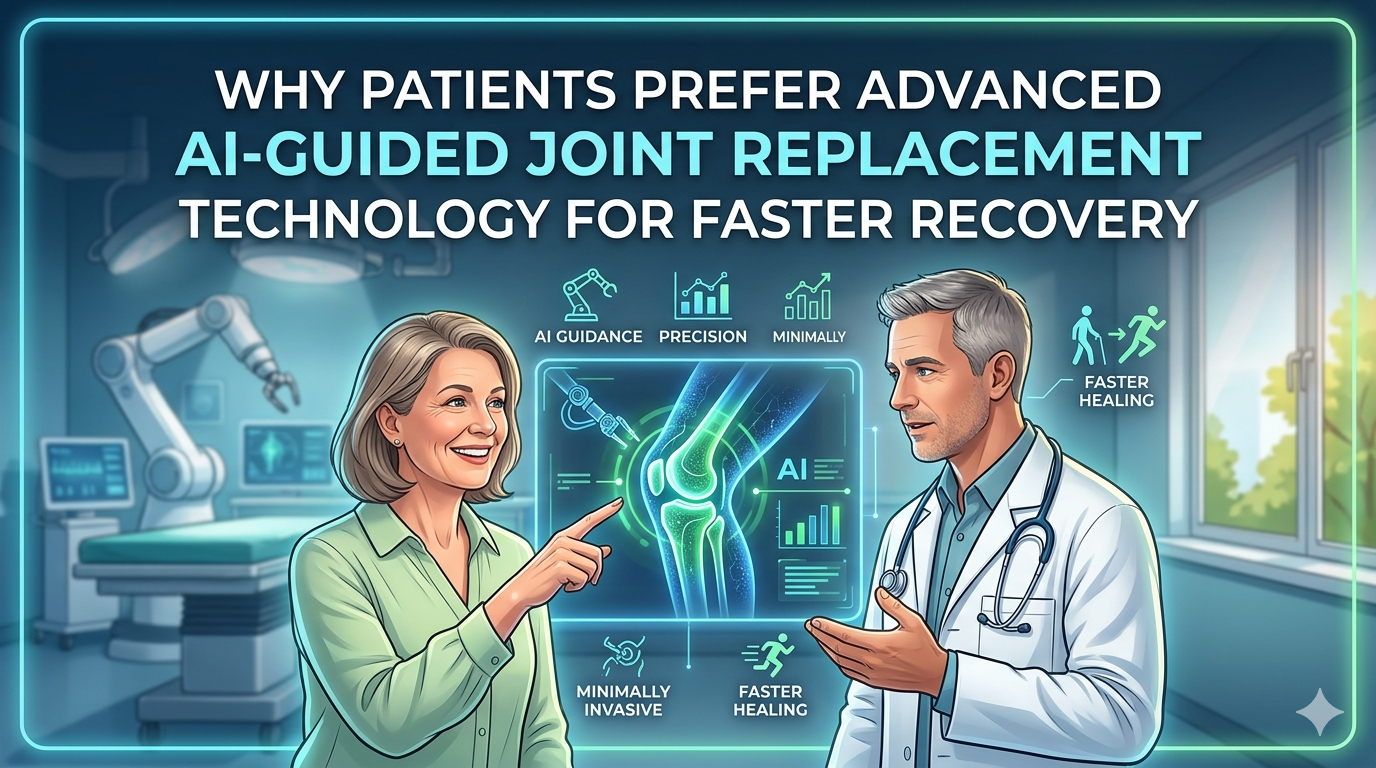
Joint replacement surgery has transformed significantly over the last decade. Today, patients are increasingly choosing advanced AI-guided joint replacement technology because it offers greater precision, reduced pain, and quicker recovery compared to conventional surgical methods. Modern orthopedic advancements now allow surgeons to customize procedures according to the patient’s anatomy, improving outcomes and helping individuals regain mobility faster.
With growing awareness about robotic and AI-assisted surgeries, patients are now seeking safer, minimally invasive, and technologically advanced treatment options for knee and hip replacement procedures. Clinics like Dr. Hemant Ortho are helping patients benefit from the latest innovations in orthopedic care.
Advanced AI-guided joint replacement technology combines artificial intelligence, robotic-assisted systems, 3D imaging, and real-time surgical planning to improve the accuracy of joint replacement surgeries. This technology helps surgeons create patient-specific surgical plans before entering the operation theatre.
Unlike traditional surgery, where implant placement relies heavily on manual techniques, advanced AI-guided joint replacement technology uses detailed imaging and computer-assisted guidance to achieve highly accurate implant positioning. This precision often results in improved joint function and faster rehabilitation.
Patients today are more informed about treatment choices than ever before. Many prefer advanced AI-guided joint replacement technology because it improves surgical outcomes and minimizes complications.
One of the biggest advantages of advanced AI-guided joint replacement technology is precision. AI-based systems help surgeons analyze the patient’s joint structure in detail and ensure accurate implant alignment during surgery.
Accurate alignment is crucial because even minor errors can affect joint movement and implant longevity. AI-guided systems help reduce these risks significantly.
A major reason patients prefer advanced AI-guided joint replacement technology is the faster recovery period. Since robotic-assisted surgery is minimally invasive and more precise, patients often experience reduced trauma to surrounding tissues.
These benefits help patients return to their daily routines much sooner than with traditional joint replacement procedures.
Every patient’s anatomy is different, and advanced AI-guided joint replacement technology allows surgeons to customize procedures accordingly. AI systems create detailed 3D models of the joint, helping surgeons plan implant size, positioning, and alignment more accurately.
This personalized approach helps improve:
Customized surgical planning is one reason why advanced AI-guided joint replacement technology is becoming increasingly popular worldwide.
Patients often worry about pain after joint replacement surgery. However, advanced AI-guided joint replacement technology minimizes unnecessary tissue damage during surgery, which can significantly reduce post-operative discomfort.
Because the procedure is more controlled and precise, many patients report:
Studies and clinical observations suggest robotic-assisted procedures can improve early mobility and patient satisfaction.
Proper implant placement is essential for long-term success after knee or hip replacement surgery. Misaligned implants may wear out faster and lead to complications over time.
With advanced AI-guided joint replacement technology, surgeons can achieve highly accurate positioning, which may improve implant durability and reduce the likelihood of revision surgeries in the future.
Mobility restoration is one of the primary goals of joint replacement surgery. Patients choosing advanced AI-guided joint replacement technology often regain movement more naturally because of improved implant alignment and joint balance.
This advanced approach helps patients:
As robotic systems continue evolving, orthopedic surgery is becoming increasingly patient-focused and outcome-driven.
India is rapidly adopting robotic and AI-assisted orthopedic procedures. Hospitals and orthopedic specialists are increasingly integrating advanced AI-guided joint replacement technology to improve surgical accuracy and patient recovery.
The growing demand is driven by:
Many orthopedic specialists now recommend robotic-assisted procedures for suitable candidates because of their clinical advantages.
Although technology plays a major role, surgeon expertise remains equally important. AI and robotic systems assist surgeons, but the final surgical decisions are always controlled by experienced orthopedic specialists.
According to information shared by Dr. Hemant Ortho, robotic systems are designed to support surgical precision while allowing surgeons to maintain full control throughout the procedure.
Patients suffering from the following conditions may benefit from advanced AI-guided joint replacement technology:
However, the suitability of robotic-assisted surgery depends on individual medical evaluation and overall health condition.
Artificial intelligence continues to transform orthopedic care. Researchers are now exploring digital twin systems, predictive recovery models, and AI-driven imaging analysis to further improve surgical outcomes.
The future of advanced AI-guided joint replacement technology may include:
As technology advances, patients can expect safer and more efficient orthopedic procedures.
The growing popularity of advanced AI-guided joint replacement technology reflects the changing landscape of modern orthopedic care. Patients today prefer procedures that offer precision, reduced pain, faster recovery, and improved long-term outcomes.
With the support of robotic-assisted systems, AI-based planning, and experienced orthopedic specialists, joint replacement surgeries are becoming more reliable and patient-friendly than ever before. Clinics such as Dr. Hemant Sharma the best Orthopedic surgeon in Gurgaon continue to adopt advanced surgical innovations that help patients regain mobility and improve their quality of life.
Yes, robotic-assisted and AI-guided joint replacement procedures are considered safe when performed by experienced orthopedic surgeons.
No, AI and robotic systems assist surgeons with precision and planning. The surgeon remains fully in control throughout the procedure.
Many patients experience quicker recovery, less pain, and improved mobility compared to traditional joint replacement surgery.
Yes, many elderly patients are suitable candidates for robotic-assisted joint replacement, depending on their overall health condition.
Yes, robotic-assisted surgery helps improve implant alignment and surgical precision.
#AIJointReplacement #AdvancedAIJointReplacementTechnology #RoboticJointReplacement #RoboticKneeReplacement #RoboticHipReplacement #JointReplacementSurgery #OrthopedicCare #OrthopedicSurgeon #KneeReplacement #HipReplacement #AdvancedOrthopedics #AIInHealthcare #RoboticSurgery #FasterRecovery #PainFreeMovement #JointPainRelief #KneePainTreatment #HipPainTreatment #ArthritisRelief #MobilityMatters #HealthyJoints #JointCare #OrthopedicInnovation #MedicalTechnology #HealthcareInnovation #MinimallyInvasiveSurgery #SmartSurgery #PrecisionSurgery #AIHealthcare #RecoveryJourney #OrthopedicTreatment #JointHealth #KneeArthritis #HipArthritis #AdvancedSurgicalCare #RoboticAssistedSurgery #FutureOfHealthcare #HealthcareTechnology #PatientRecovery #BoneAndJointCare #BestOrthopedicCare #JointReplacementRecovery #DigitalHealthcare #JointReplacementSpecialist #AIOrthopedics #OrthopedicSolutions #AdvancedMedicalCare #KneeCare #HipCare #MobilityRecovery #DrHemantOrtho #RoboticOrthopedics #SmartHealthcare #ModernOrthopedics #JointReplacementIndia #OrthopedicExcellence #HealthyLiving #SurgicalInnovation #ArthritisTreatment #OrthopedicHealth